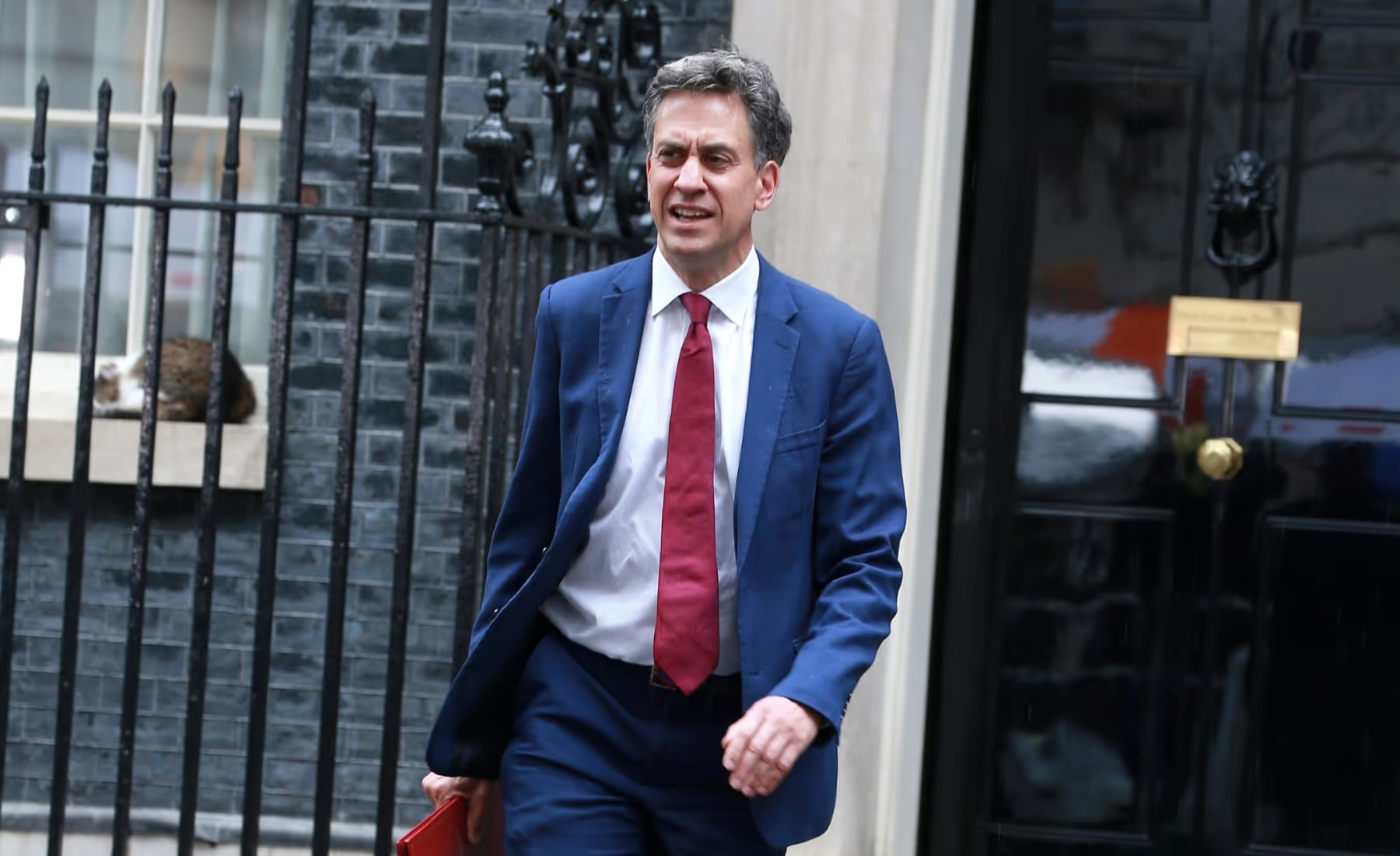
Ed Miliband smiled when he was asked by Victoria Derbyshire this weekend whether the chancellor would be cutting VAT on energy bills. This could have been a wry smile of an argument lost, but it tallies with reports that we are hearing that the chancellor is considering a cut to the 5% VAT currently charged on household energy bills. With millions of homes still struggling with high costs, any measure to ease bills would be welcome.
Reducing VAT on gas and electricity is probably the easiest and quickest way for the chancellor to reduce household costs and show that the government is listening to the concerns of billpayers. A flat rate cut across gas and electricity on its own would miss the opportunity to address the fundamental problem that levies are unfairly burdened on electricity, which creates a perverse market signal against the electrification of energy demand and poses unfair costs on those without access to mains gas.
There is an opportunity here to go further, by considering all taxes and levies on energy bills, and focusing bill reductions on electricity. This offers a way to cut bills for all households, while also supporting the government's wider aim to decarbonise heat, transport and industrial demand.
Why electricity should be the focus
Energy levies and taxes were designed at a time when gas was the cheaper, cleaner option. This is no longer true. This means that electricity bears a higher burden of the policy costs that fund renewable energy, energy efficiency and social support than gas.
As a result, households with electric heating – including many in homes without access to the gas grid – face higher energy costs, paying nearly eight times more in policy costs than equivalent gas customers. This unfairness contributes directly to fuel poverty, with electrically heated homes being almost twice as likely to be in fuel poverty and having a fuel poverty gap of twice the national average.
Supporting the shift to low-carbon heat
If the UK is to meet its targets for low-carbon heating, electricity needs to compete fairly with gas. Heat pumps are several times more efficient than boilers and considerably lower carbon, but the high cost of electricity, driven in part by levies and taxes, still discourages households from switching. Ambitions to deploy clean heat technologies will fail if the gap between electricity and gas prices is not addressed.
Bringing down the cost of electricity would make low-carbon technologies more affordable and speed up the transition away from fossil fuels, reducing emissions, improving air quality and supporting green jobs in the process. This is in line with the government’s industrial policy on clean heat and its growth ambitions, as well as addressing its manifesto promise of lower bills.
We need to make it cheaper to use clean energy, not fossil fuels. Rebalancing energy bills so that electricity isn’t penalised is one of the simplest ways the government can make low-carbon heating affordable and fair.
Seize the moment to reform energy levies
Reducing energy bills is vital to tackle the cost-of-living crisis and persistent inflation. Cutting VAT on gas and electricity would bring welcome relief to households across the country, but also creates a rare opportunity to reform levies.
Rebalancing policy levies alongside a VAT cut would allow government to make a fairer system, while reducing bills for everyone. This combined approach would reduce costs for households most affected by high electricity prices, help make clean heating more affordable, and better align the market with the transition to net zero. It’s one of the most effective steps government can take to deliver both fairness and climate action and the moment to do it is now.