Britain's gas network is entering a period of profound change. Gas demand has fallen by almost 40% since 2004, and as more homes and businesses switch to low-carbon alternatives the network will need to adapt to serve a shrinking customer base. The government has recognised the need to plan for this through its call for evidence on the recovery of gas network costs during the transition.
Commissioned by the MCS Foundation, The Future of the Gas Grid examines the implications for how the gas distribution network is maintained, funded and eventually decommissioned. It calls for early action from the government and Ofgem to ensure the transition is managed efficiently and fairly.
£1.5bn per year is currently spent on pipe maintenance and replacement
The gas distribution network currently serves around 25 million customers across Great Britain. But the regulatory framework was designed for a network serving a large and relatively stable customer base, rather than one that will progressively shrink.
Without changes to how network costs are recovered, the costs of maintaining and paying for the network will increasingly fall on fewer customers. This risks leaving households that are least able to switch to clean heating facing disproportionately high charges.
The Future of the Gas Grid sets out how early planning could reduce these risks, avoid unnecessary expenditure and ensure the costs of the transition are shared fairly.
The report identifies three priorities for the government and Ofgem:
Recover network costs fairly. Develop a pathway for recovering existing investment in the gas network while the customer base remains large, rather than leaving the costs to a shrinking number of future customers.
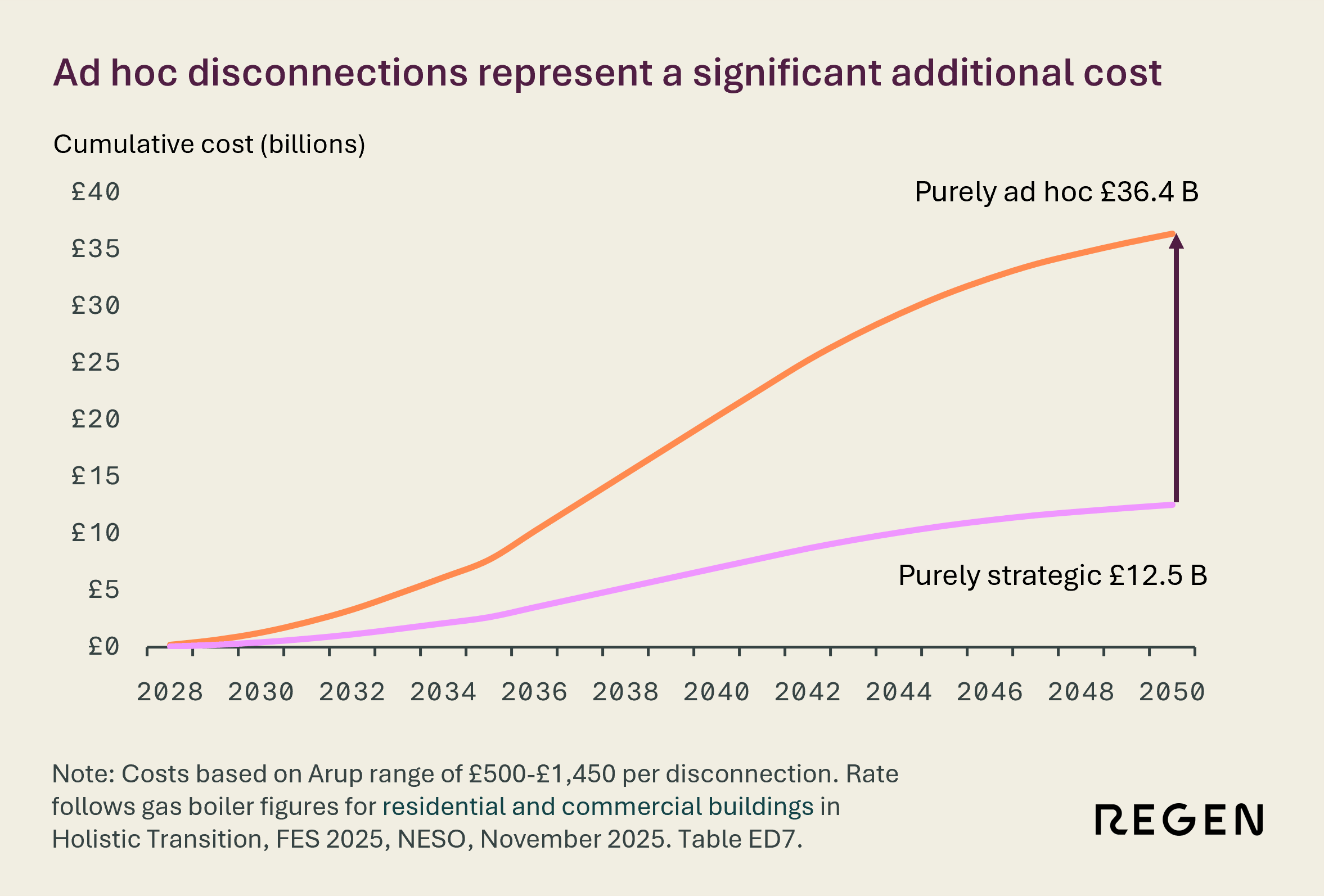
Plan for decommissioning. Explore a coordinated, area-based approach to disconnections and decommissioning, rather than relying on individual customers disconnecting one by one. Initial analysis suggests this could reduce disconnection costs by around 65%, potentially avoiding £24bn in expenditure.
Protect consumers. Ensure households that face financial, practical or technical barriers to moving away from gas are supported, so that no one is left dependent on an increasingly expensive network.
The report recommends that Ofgem uses the current gas distribution price control period, RIIO-GD3 (2026–2031), to support pilot projects and develop the evidence needed for future decisions. It also calls on the government to explore a decommissioning fund and establish a framework for consumer protection.
We welcome the government's recognition of this challenge and effort to start building the evidence base required to address it through its recent call for evidence on the recovery of gas network costs during the transition. It rightly asserts that the transition "must be orderly, fair and consumer-focused" and that households who cannot yet make the switch to clean heat should not face unreasonable costs. Achieving this requires a strategic approach to the challenge, as set out in our paper.
Table Contents
At a glance
Key recommendations
Ofgem should set out a pathway in the next price control (RIIO-GD4) to depreciate the whole RAV by 2050.
The government should explore the creation of a decommissioning fund in its review of network investment and affordability.
The government should commission a study of area-based decommissioning to understand the costs and impacts of different approaches to delivering customer disconnection and decommissioning at scale.
Ofgem should fund decommissioning pilot programmes during this price control period (GD3 2026-2031), to provide evidence for wider decommissioning during GD4 and beyond.
The government and Ofgem should develop a plan for consumer protection in the delivery of gas network decommissioning, so that no household is left trapped on an increasingly expensive network or is unable to access clean heat.
One of Regen's strategic goals is ensuring a just transition, where the benefits and costs of decarbonisation are shared fairly, existing inequalities are not entrenched, and the transformation of our energy system becomes an opportunity to create a more equitable society. Thinking through future issues such as what happens to the gas network are vital to ensuring this.
As an independent not-for-profit organisation, we are steadfast in our mission to ensure an energy transition that's both fast and fair. If you're interested in working with us on emerging issues such as this, please contact Ray Arrell or read about the services we offer. If your organisation aligns with our mission, perhaps Regen membership is for you. To discuss the options, reach out to Hannah Stanley.