


In this first in a series of reflective blogs from her Churchill Fellowship project, Rebecca Windemer reflects on the role of the Australian Energy Infrastructure Commissioner and why a similar figure could help support the UK’s energy transition.


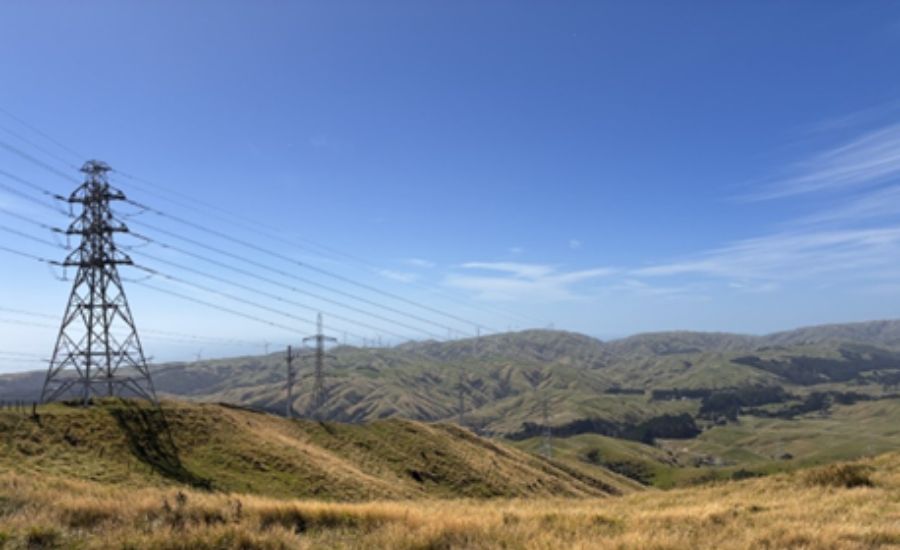


In this first in a series of reflective blogs from her Churchill Fellowship project, Rebecca Windemer reflects on the role of the Australian Energy Infrastructure Commissioner and why a similar figure could help support the UK’s energy transition.
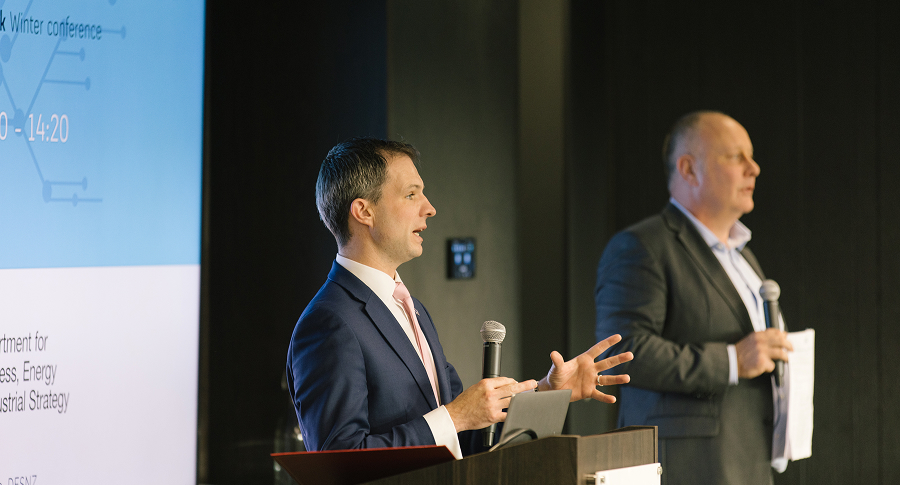
Whether it’s onshore wind, battery storage or transmission infrastructure, one question keeps emerging: how do we build public trust in the energy transition?
Misinformation keeps spreading. Communities often struggle to know who to speak to about concerns with proposed or operational renewable projects in their local area. Developers may hold the answers, but communities do not always view them as impartial. Local authorities are frequently overstretched and may lack the capacity to respond to detailed concerns or facilitate ongoing dialogue.
In the UK, there is currently no independent ‘middle ground’ institution that can consistently work with both communities and developers to facilitate open discussion, address misinformation and help resolve disputes. That challenge is only likely to intensify as the UK implements its first Strategic Spatial Energy Plan (SSEP) and accelerates renewable energy and transmission deployment at an unprecedented scale.
Australia may offer a useful lesson here. It has established an independent Energy Infrastructure Commissioner to help manage the social impacts of the energy transition. The role does not approve projects, but acts as an intermediary between communities, developers and government, focused specifically on transparency, dispute resolution and public confidence.
In this blog I draw upon my overseas research to set out why the UK should consider creating a similar role.
The scale of infrastructure required for net zero is now well understood. The UK has ambitious targets, a relatively clear policy direction and a clean energy sector working hard to deliver at pace. However, alongside this progress, local opposition to infrastructure remains a key challenge.
In principle, public support for renewable energy remains relatively strong. In practice, opposition often emerges when communities feel decisions are happening to them, rather than with them, or when certain communities face multiple applications in their local area.
This is not simply a planning issue, its a governance issue.
There’s a huge amount happening in UK energy policy at the moment and, even for those of us working in this area, it can feel confusing. NESO is engaging with communities on both Regional Energy Strategic Plans (RESPs) and the Strategic Spatial Energy Plan (SSEP). Local authorities are often speaking to the same communities, while developers are running consultations under tight timelines and commercial pressures.
Yet no single institution is explicitly responsible for maintaining public confidence in the energy transition itself or providing a place to resolve conflict.
As a result:
Social licence is a material delivery risk for developers, yet social licence challenges extend beyond individual projects.
Australia’s Energy Infrastructure Commissioner was originally established in 2015 as the National Wind Farm Commissioner before expanding in 2021 to cover transmission, large-scale solar and storage infrastructure.
They are appointed by the Australian government and report to the Minister for Climate Change and Energy. The role is supported by a team within the Department of Climate Change, Energy, the Environment and Water.
Its purpose is to work collaboratively with government, industry and communities to address concerns and improve confidence in energy infrastructure development. This includes:
Importantly, the commissioner is visible and accessible on the ground, regularly meeting with communities directly affected by infrastructure projects.
The office does not approve or reject developments, and it does not replace planning authorities or regulators.
An Energy Infrastructure Commissioner would not single-handedly resolve all of the UK’s renewable energy infrastructure challenges, but it could help in a number of important ways.
Communities often face difficulties in knowing how to raise concerns. An independent commissioner could provide a neutral and trusted point of contact for residents navigating complex infrastructure proposals or experiencing challenges with operational projects.
Engagement quality currently varies significantly between projects. A commissioner could establish and promote national best-practice standards for consultation, benefit sharing and landowner engagement. This would help raise standards across the sector while reducing uncertainty for developers.
Infrastructure delays are increasingly driven by social and political challenges. Early mediation and clearer communication can reduce the likelihood of disputes escalating into prolonged opposition campaigns or legal challenges. This is not about removing democratic scrutiny; it's about improving the quality of engagement before positions harden irreversibly.
Much of the infrastructure required for net zero will be located in rural and coastal areas. Communities hosting nationally significant infrastructure should feel they are partners in the transition, not simply locations where assets are placed. A commissioner could help ensure local economic benefits, skills opportunities and long-term community value are embedded more systematically into infrastructure delivery.
In Australia, the Energy Infrastructure Commissioner has identified decommissioning as an emerging concern for communities. This highlights the value of listening to on-the-ground experiences and identifying issues before they become major sources of conflict.
Creating an Energy Infrastructure Commissioner would not solve every challenge facing UK renewable energy and transmission development, but it could help with one of our biggest challenges – public acceptance.
I believe the UK government should consider establishing a similar role ahead of the implementation of the Strategic Spatial Energy Plan. The UK government has invested heavily in the strategic planning of our energy system, it is now time to invest in social acceptance.
An Energy Infrastructure Commissioner would not eliminate disagreement, but it could help create a more transparent and trusted process for delivering the infrastructure the UK now needs. If we're serious about accelerating the energy transition, we also need to be serious about how it brings communities with us.
If you are interested in discussing this further please reach out to Rebecca.



