This insight is more than 2 years old
Clean power
Just transition

Regen welcomes proposed benefits for communities affected by transmission network infrastructure

Date
October 2, 2025

Table Contents

At a glance

This joint response by Regen’s planning lead, Rebecca Windemer, and Professor Patrick Devine-Wright, director of the University of Exeter’s ACCESS Network, draws on research and lessons from international case studies, including Irish grid operator EirGrid's pilot community fund.

We welcome the government’s proposals to provide a range of community benefits to those affected by new transmission network infrastructure. We particularly support the combination of direct bill discounts, wider community funds and guidance on good engagement, which together can deliver meaningful local value.

Our response focuses on a small number of specific areas where further consideration could help ensure the scheme achieves its intended benefits while keeping fairness at its core.

It is essential that decisions on the scheme are not taken in isolation. Clear and accessible communication with communities, procedural fairness and robust monitoring will be key to maintaining trust and ensuring the scheme delivers its benefits equitably.

Key recommendations

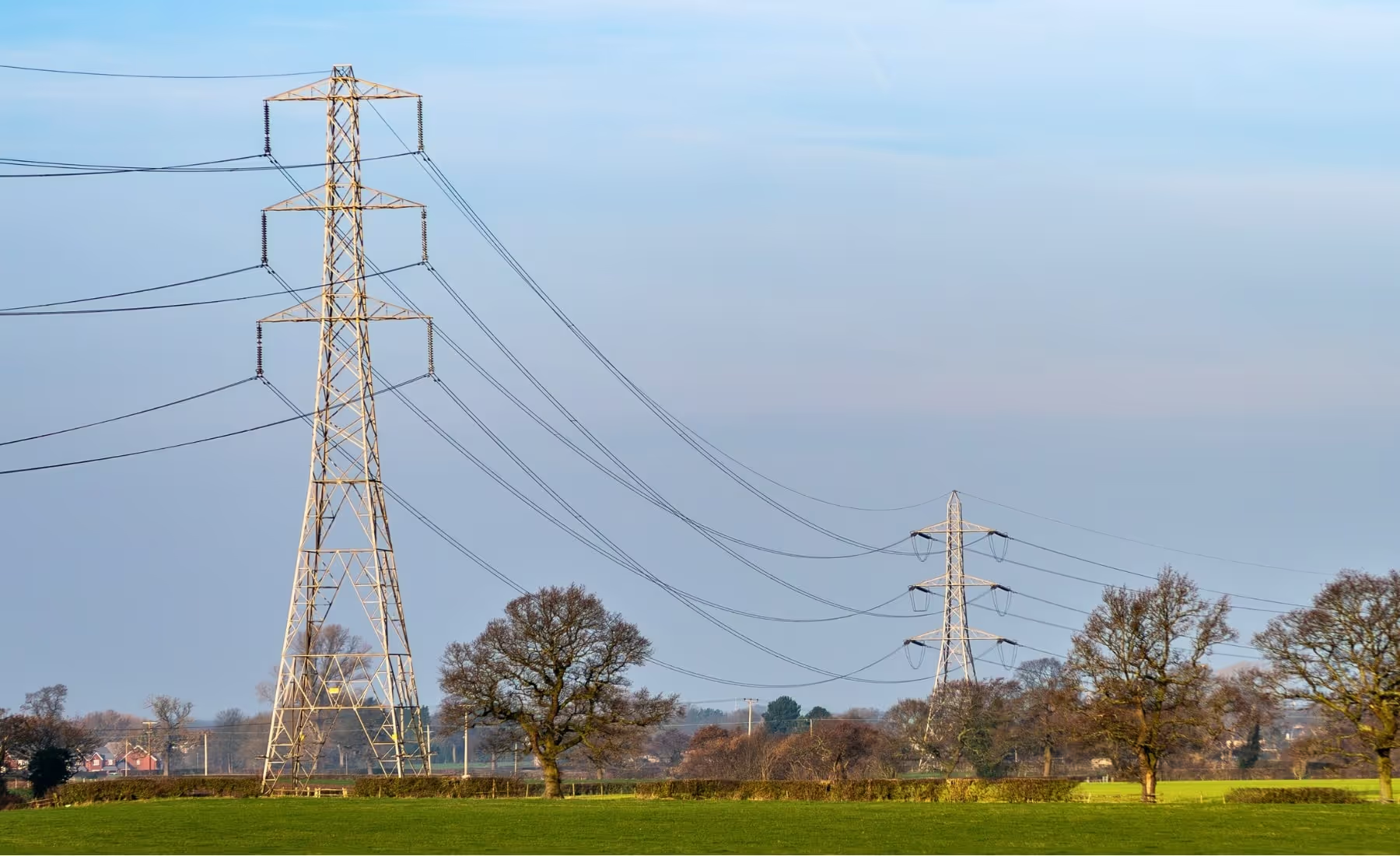
  • The need to consider topography. Spatial boundaries for community benefits should be defined based on visual impacts and topography to ensure all affected properties can participate. The current design of households living with a fixed distance of 500m of transmission infrastructure is a poor proxy for actual impact, and could cause unintended conflict within communities and between communities and grid operators.
  • Ensuring the opt-in process is fair. The opt-in process must be widely accessible, supported by capacity building and awareness-raising, monitored for fairness, and extended to all directly affected stakeholders, including hard-to-reach communities and impacted businesses.
  • Transparent justification for the proposed approach. In order to help communities understand how the scheme has been designed, DESNZ should publicise in an accessible format the rationale for the 10-year scheme duration, the proposed discount amount and the 500m distance threshold.

Regen continues to work in this area to ensure that transmission upgrades happen in a way that best involves and supports local communities. If you’d like to discuss this topic further, please get in touch with Rebecca Windemer, or register to attend our next members' planning working group.

Advancing Capacity for Climate and Social Science (ACCESS) is a five-year ESRC-funded programme bringing together academic and stakeholder partners to ensure environmental policy is grounded in robust evidence and social insight. Rebecca Windemer is a fellow of the ACCESS Leadership College – a cohort of 20 emerging leaders working in environmental social science.

STAY INFORMED

The Dispatch

Sign up to receive our monthly newsletter containing industry insights, our latest research and upcoming events.

Submission successful
Thank you for signing up to The Dispatch.
There was an error submitting the form. Please check the highlighted fields in red.