Imagining better futures through communal meals, creativity, and community energy
Context
In 2018 Regen collaborated with Dr David Sergeant (then at Plymouth University) on Feasts for the Future, part of his AHRC Early Career Research Leadership Fellowship. The project aimed to explore how communities could use imagination and storytelling to think differently about energy and sustainability.
David’s concept drew on his research into “utopian realism” — using hopeful, grounded visions of the future to inspire present action.
“We came upon the idea of Feasts for the Future whereby people would share food while also creating and maintaining community through talking, storytelling, and remembering — loosely on the theme of energy and the future.” – David Sergeant
What Happened
- Regen connected David with four Devon-based community energy groups.
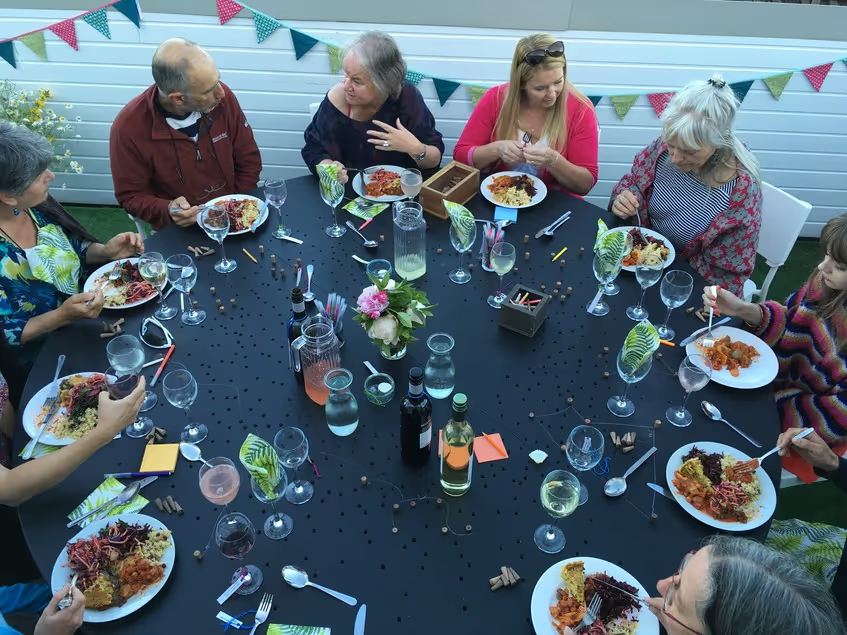
- Together they designed and delivered Utopian Feasts, where people gathered over shared meals to explore possible futures.
- Events included: Plymouth Athenaeum with PEC Pals, a feast on a renewable energy farm in the Teign Valley, one in Ivybridge Methodist Church with South Dartmoor Community Energy, and another with Tamar Energy Community.
- A specially commissioned Feast Table by artist Barnaby Stone acted as both catalyst and record. Guests inscribed pegs with drawings and messages, embedding them into the surface. The table now hangs at the University of Plymouth as a lasting artefact.
David recalls the power of letting each community shape their own event:
“It was wonderful to see each community bend the core project ideas to who they were, where they were, and what they wanted to do next.”
Learning
- Community capacity matters – volunteer groups are often overstretched. Support was crucial.
- Creativity opens doors – food, ritual, and the Feast Table helped people imagine differently.
- Energy challenges are real – conversations surfaced frustrations about planning, finance, and political will.
- Change is gradual – the project sparked slow shifts rather than dramatic breakthroughs.
“The change I saw was more constant and gradual… a slow burn, a long march. What mattered was the joy of people being together and sharing those moments.” – David Sergeant
Impact
- On participants: Feasts made climate and energy conversations enjoyable, human, and memorable.
- On Regen: The project reinforced Regen’s confidence in arts-based engagement and strengthened ties with community energy groups.
- On David: It profoundly influenced his academic direction.
“It clarified what I wanted to write. Feast for the Future fed directly into my book and then into Net Zero Visions. There’s a definite chain of connection.”
Reflections on Creativity and Energy
David sees creativity as essential in opening up possibilities:
“Engaging with the arts in professions that are often very rational and left-brain isn’t just good for the soul. It can actually make the work better.”
He argues that authentic creative work — making for joy and meaning rather than utility — is itself utopian:
“To make something for joy, for meaning, to express who you are — that’s utopian in itself. It’s resisting the idea that everything is about production.”
Legacy
The Feast Table remains a striking symbol of collective imagination, but the project’s deeper legacy lies in how it seeded Regen’s ongoing art and energy programme. It showed that creative, participatory forms of engagement can make energy transition visible, relatable, and hopeful.
“Remembering it can be otherwise, and has been otherwise, is still powerful and important — even in the face of the lack of significant change.” – David Sergeant
Tips for Energy Organisations
- Support community capacity: volunteer-led groups need practical help with logistics and time. Don’t overload them.
- Make space for creativity: food, ritual, and artistic prompts (like the Feast Table) help open up new conversations.
- Don’t expect quick wins: impact may be gradual and subtle, but the cultural shift is valuable.
- Be open to difference: let each community shape the event to their own identity and needs.
- Work with artists as collaborators: not just as communicators — they bring different ways of seeing and thinking.
Tips for Creatives
- Ground your ideas: connect imaginative work to people’s real lives, places, and daily practices.
- Trust in playfulness: joy, ritual, and sensory experience make big issues less overwhelming.
- Work with, not for, communities: co-design processes build ownership and authenticity.
- Embrace slow impact: small shifts in perspective can be just as powerful as big “aha” moments.
- Value your role: creativity in itself is utopian — it offers meaning, hope, and alternative ways of being.
To find out more please visit the project website