




The publication that sparked Regen’s Art and Energy journey
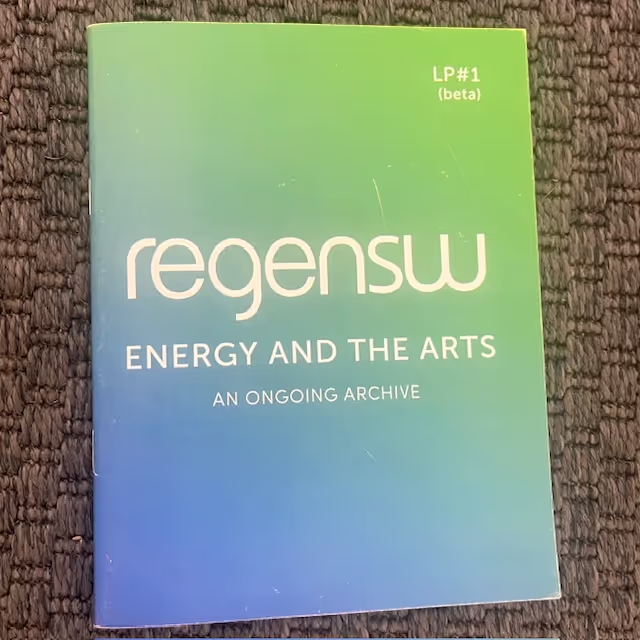
In 2014 Regen launched its first dedicated exploration into the relationship between creativity and energy. With artist and researcher Nick Davies as its first arts and culture intern, Regen produced Energy and the Arts — a printed and digital publication that gathered over 100 examples of projects where artists had responded to energy systems, technologies, and debates.
The publication was disseminated at the Renewable Energy Marketplace event in Bristol and at the Renewable Futures conference, marking the beginning of Regen’s long-running commitment to embedding creativity within the energy transition.
Nick joined Regen while working in Exeter, balancing call centre work, running a risograph press, and pursuing his own art practice. Inspired by permaculture’s positive visions of the future and his interest in sustainability, he saw Regen’s call-out as “a way to figure out how art could be useful” beyond the gallery.
“It was exciting to see an organisation engaging with the arts and feeling like it had a way of benefiting their message. That validated something for me — the usefulness of art in relation to energy.” – Nick Davies
Nick researched widely, uncovering a rich and diverse body of work that spanned literature, fine art, architecture, film, and design. Examples included:
He also revisited historic works such as Lowry’s Industrial Landscape, situating energy as a longstanding cultural theme.
Nick’s reflective essay, Exploring Vast Caves with iPads on WiFi, captured his sense of stepping into an unfamiliar but vast and vital field. He asked provocative questions that remain relevant today:
The publication was more than a catalogue. It was a provocation: an invitation for artists to join the energy debate, and for energy professionals to see value in artistic perspectives.
“It always felt like it was very future-facing. Art about energy isn’t nostalgic — it’s about what comes next. That’s what makes it exciting.” – Nick Davies
Energy and the Arts marked the beginning of Regen’s Art and Energy programme. From this modest printed booklet has grown a decade of collaborations: from poetry and portraiture to interactive solar artworks and international research.
Nick reflects:
“It felt like a starting point. I always have ‘what ifs’ in my mind… but this gave me a sense of what’s possible when artists and energy people work together.”



