This insight is more than 2 years old
Just transition

Case study: Powering Participation: Tim Crook’s Creative Approach to Demand Side Response

Date
April 30, 2025

Table Contents

At a glance

When Tim Crook, Regen’s Head of Demand and Flexibility, set out on his Churchill Fellowship, he wasn’t looking for technical fixes. He was chasing a bigger, trickier question: how do you get people to care about something as invisible and abstract as Demand Side Response?

Instead of graphs and incentives, he went looking for creativity — from theatre companies to public art, from playful installations to participatory storytelling. Along the way he discovered that sometimes the best way to talk about the grid is to stop talking about it directly, and instead create experiences that surprise, delight, and invite people in.

Over several weeks in the US, Scandinavia, Spain, and Australia, Tim explored examples of public engagement in energy and climate. He discovered that while creativity is common in climate communication, in the energy sector it is rare — and often hidden behind technical processes, gatekeeping, and industry silos.

“Energy is invisible, complicated, and usually kept behind the curtain. But everyone uses it. Everyone owns the system. That’s something to celebrate.”

The Spark

Tim’s interest in creativity runs deep. Outside work he plays in a band and repurposes old objects into something new. This mindset — valuing process over product — shaped his approach to the Fellowship.

“The value is in the journey. You don’t get moments of inspiration without the 90% that’s flat or frustrating.”

He was particularly inspired by an incident in California where a simple text message asking residents to reduce demand averted blackouts — without financial incentives. The public responded out of a sense of shared responsibility.

“That’s the NHS effect — feeling part of something bigger. If people see themselves as part-owners of the energy system, they’re more likely to act for the good of all.”

Creative Encounters

While creative engagement in energy was scarce, Tim did find inspiring examples:

  • Washington DC – utility boxes vinyl-wrapped by local artists, turning dull infrastructure into a public art trail.
  • Live data visualisation – using colour-changing lights to reflect real-time grid performance, offering emotional cues instead of unreadable graphs.
  • Land Art Generator Initiative – architectural competitions for public artworks that generate renewable power.

He also noted cultural differences:

  • US regional identity fostered playful competition between local systems.
  • Australia’s community-led initiatives embraced visibility, fun, and novelty.
  • Spain showed the risks of making big energy decisions without meaningful public engagement.

Barriers to Creativity

Tim identified several obstacles holding back creative collaboration in energy:

  • Gatekeeping – a culture of “leave it to the experts” limits public connection.
  • Siloed audiences – the public and industry speak different languages and rarely meet in the middle.
  • Over-prioritisation of financial incentives – overlooking social, emotional, and aesthetic motivations.

“Not every value in the energy system needs to be measured in money. Celebrating the system itself is reason enough to be creative.”

Shifting the Narrative

Tim’s recommendations for reframing DSR messaging are rooted in human connection:

  • Make participation feel like a contribution to community and national wellbeing.
  • Link energy behaviours to everyday life — for example, tying forecasts to the weather report.
  • Use art and design to create attractive, meaningful points of interaction.

Lessons for the Energy Sector

  1. Dare to be different – A visually distinctive report or event stands out in a crowded field of technical outputs.

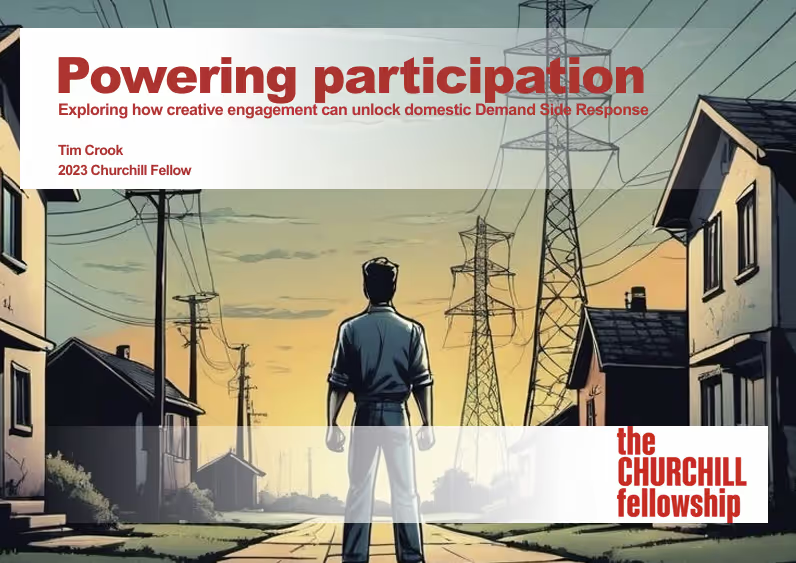
“Everyone has a stack of reports they mean to read. Mine got read because it looked different — and was fun.”

  1. Open the gates – Invite the public into the workings of the energy system; demystify it.
  2. Value joy and novelty – Fun is not frivolous. It’s a catalyst for engagement and action.
  3. Plan for more than money – Incentives can be social, cultural, and emotional as well as financial.
  4. Pick your audience – Design creative interventions for either the public or the industry; bridging both at once is rare and difficult.

Tips for Creatives Working with Energy

  • Understand the culture – Energy professionals work in a highly regulated, cautious environment; find shared language and goals.
  • Choose your target – Public audiences need accessibility; industry audiences need relevance.
  • Embrace the poetic – Energy has sensory and symbolic qualities (the hum of pylons, the link with weather) that can inspire compelling work.
  • Prototype the interaction – Test creative engagement in small pilots to refine approach before scaling.
  • Collaborate with insiders – Partnering with a willing energy organisation unlocks access and credibility.

The Personal Impact

The Fellowship gave Tim confidence in his own perspective and the courage to make recommendations outside the safety of an organisational brand.

“I had to stand by my own ideas. It was scary, but empowering. The aim wasn’t to change the world overnight — just to offer a different lens.”

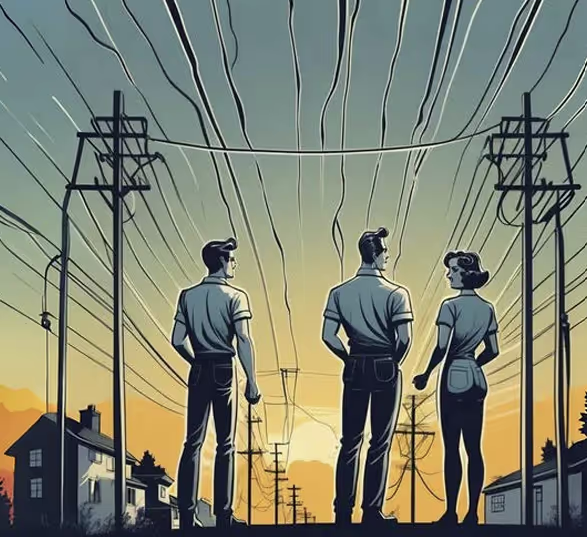
His playful, visually distinctive Fellowship report was shared widely, invited speaking engagements (including Ofgem), and helped position Regen in the growing space where behavioural insight meets flexibility.

Looking Ahead

Tim dreams of more tangible, creative tools for public energy engagement:

  • A beautifully designed home energy display that inspires action rather than guilt.
  • Physical models showing the flow of energy in real time.
  • Public art that celebrates shared ownership of the energy system.

“Art, creativity, and openness are the keys to unlocking public connection with energy. If we can do that, we can give people real agency on climate change.”

You can read Tim's report here

Key recommendations

STAY INFORMED

The Dispatch

Sign up to receive our monthly newsletter containing industry insights, our latest research and upcoming events.

Submission successful
Thank you for signing up to The Dispatch.
There was an error submitting the form. Please check the highlighted fields in red.