


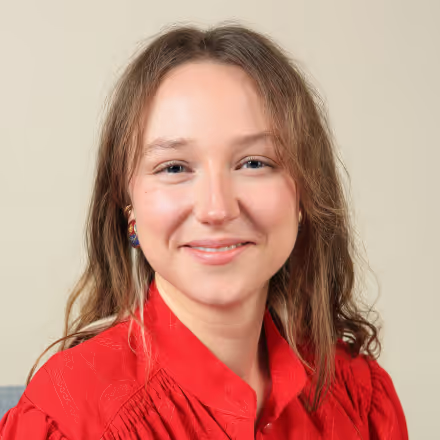


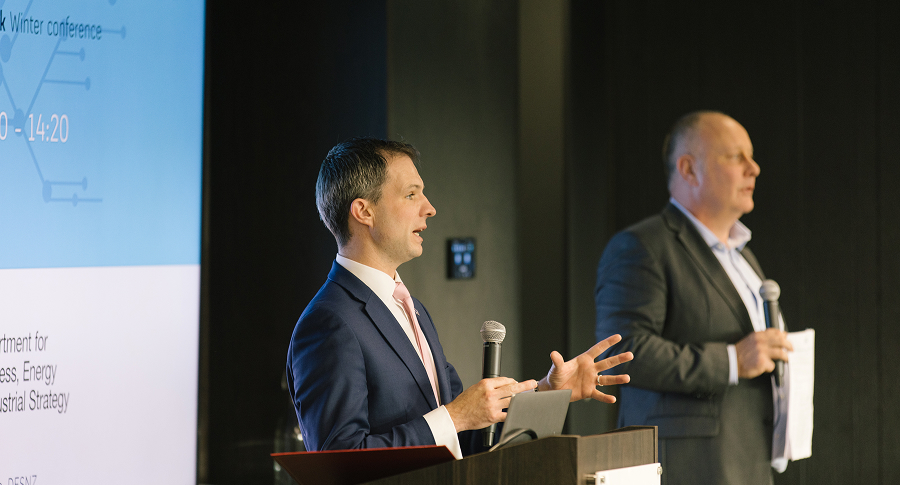
Between 2021 and 2024, Regen ran The Art Lab, a three-year programme exploring what happens when artists and energy experts work together. Co-designed (With Emma Pavan de Ceccatty) and led by Sophie Whinney, the initiative invited artists into the world of clean energy — not to communicate technical details, but to co-create, experiment, and reveal new ways of thinking about power, systems, and community.
Here, Sophie reflects on what she learned about collaboration, trust, and why creativity belongs at the heart of the energy transition.
When Sophie Whinney joined Regen, it wasn’t just the energy work that drew her in – it was the creativity quietly running through the organisation’s DNA. She’d first encountered Regen through an arts-meets-energy project and immediately sensed something rare: a space where imagination and infrastructure could coexist.
A few years later, Sophie became the driving force behind The Art Lab – Regen’s artist residency programme, which brought together artists and energy experts to explore a shared question: what happens when art and energy meet?
Her hope was simple – to create something beautiful and thought-provoking that helped everyone involved, artists and engineers alike, to see the world differently. But the experience offered much more: a masterclass in collaboration, creative process, and care.
One of Sophie’s early realisations was that creative exploration is infinite unless someone decides where it ends. “Artists are brilliant at opening up possibilities,” she reflected, “but part of my role was helping draw a line — to mark the moment when exploration becomes creation.”
That shift, she observed, is vital: it’s when energy and focus crystallise, and the work finds its form.
Regen’s leadership offered Sophie a rare kind of freedom – the trust to design a programme from scratch. That trust shaped her philosophy as a producer: to give artists creative space, but also to hold them with structure and care.
She learned that creative work doesn’t just need project management; it needs pastoral support. “Sometimes the most supportive thing you can do is to help someone stop,” she explained. “To remind them that what they’ve made is enough.”
Each residency brought unexpected discoveries. Some of the most powerful moments came when artists and energy professionals realised they were speaking the same language – curiosity, problem-solving, systems thinking – even if their vocabularies differed.
The presence of artists inside Regen’s office had a transformative effect. Engineers found themselves discussing colour and emotion, while artists asked questions about grid constraints and local networks. “Those conversations sparked ideas no one could have predicted,” Sophie said. “They made the organisation feel alive.”
Sophie believes there’s an abundance of art about the climate emergency, but not nearly enough that explores energy itself – the invisible systems that power our lives. “Energy isn’t just wires and watts,” she said. “It’s rhythm, flow, transformation. It’s full of creative potential.”
For her, The Art Lab was proof that energy is not just a technical subject but a profoundly human one – rich with metaphor, story, and emotion.
Reflecting on her time leading The Art Lab, Sophie is clear that this kind of work isn’t a “nice to have.” It’s essential to a just and meaningful energy transition.
“It’s about connecting imagination to infrastructure,” she said. “If people can’t see themselves in the energy story, they won’t feel part of it.”
The experience also gave her personal confidence. “Five years ago, I wasn’t sure if this sort of work really counted,” she reflected. “Now I know it does. It changes people, organisations, and what we believe is possible.”
“Artists are brilliant at opening up possibilities — but part of my role was helping mark the moment when exploration becomes creation.”
“Sometimes the most supportive thing you can do is to help someone stop — to remind them that what they’ve made is enough.”
“If people can’t see themselves in the energy story, they won’t feel part of it.”
1. Trust people to surprise you.
The best creative work happens when everyone involved — artists, engineers, producers — feels trusted to explore and take risks. Trust builds confidence; confidence builds courage.
2. Create space for process, not just output.
It’s tempting to focus on deliverables, but creativity needs time to unfold. The richest moments often happen in between — in conversations, experiments, or unexpected detours.
3. Care is part of the work.
Artists bring vulnerability and deep emotional engagement to what they do. Support and pastoral care are as important as logistics or deadlines.
4. Know when to stop.
Exploration can go on forever. Part of producing is helping to mark the moment when something is complete enough — when the creative energy can rest.
5. Bring people together early.
Don’t wait until the art is finished to introduce it to the technical team, or vice versa. Co-creation is far more powerful than presentation.
6. Value curiosity over certainty.
Artists and energy experts often share the same questions, even if they use different language. Curiosity creates common ground where expertise might divide.
7. Hold the tension between structure and freedom.
Too much structure can suffocate creativity; too little can feel unsafe. The art is in balancing the two.
8. Make the invisible visible.
Energy is an abstract subject. Artists can translate it into rhythm, flow, movement, and story — helping people feel their connection to it.
9. Celebrate the small wins.
A single conversation that changes how someone sees their work is just as valuable as a finished artwork or event. Don’t underestimate quiet impact.
10. Keep the door open.
Every project should lead to more — new collaborations, new thinking, new friendships. Creativity is a renewable resource; keep it circulating.



