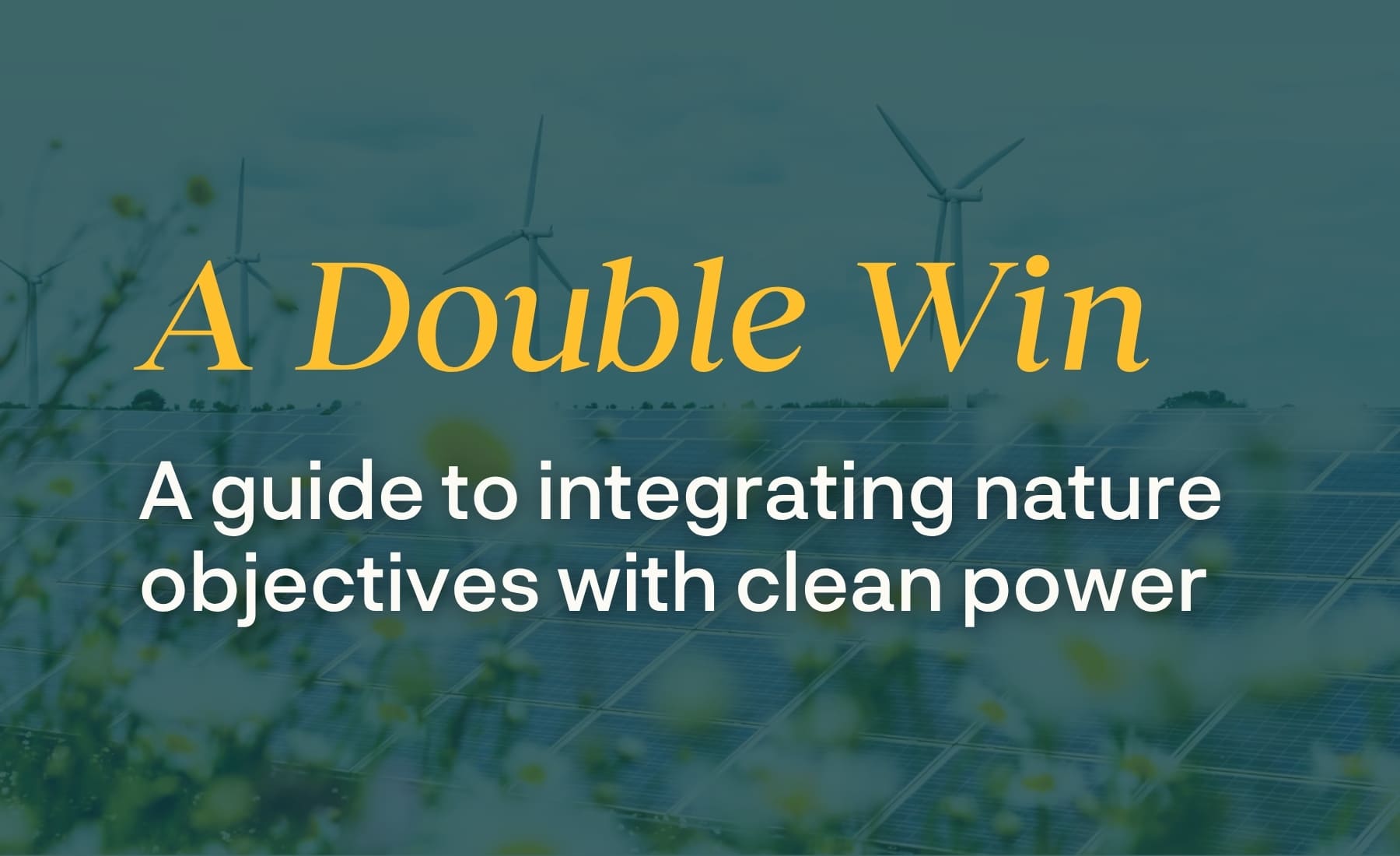
How we generate, store and use energy has always affected land, but in the last two centuries this fundamental relationship has become increasingly removed from the land closest to us. Now, the growth of renewables is bringing energy back closer to home, and along with it, new opportunities to engage with and benefit from energy.
This blog explores the historical relationship between energy and land use, and considers how renewable energy could become a catalyst for positive change.
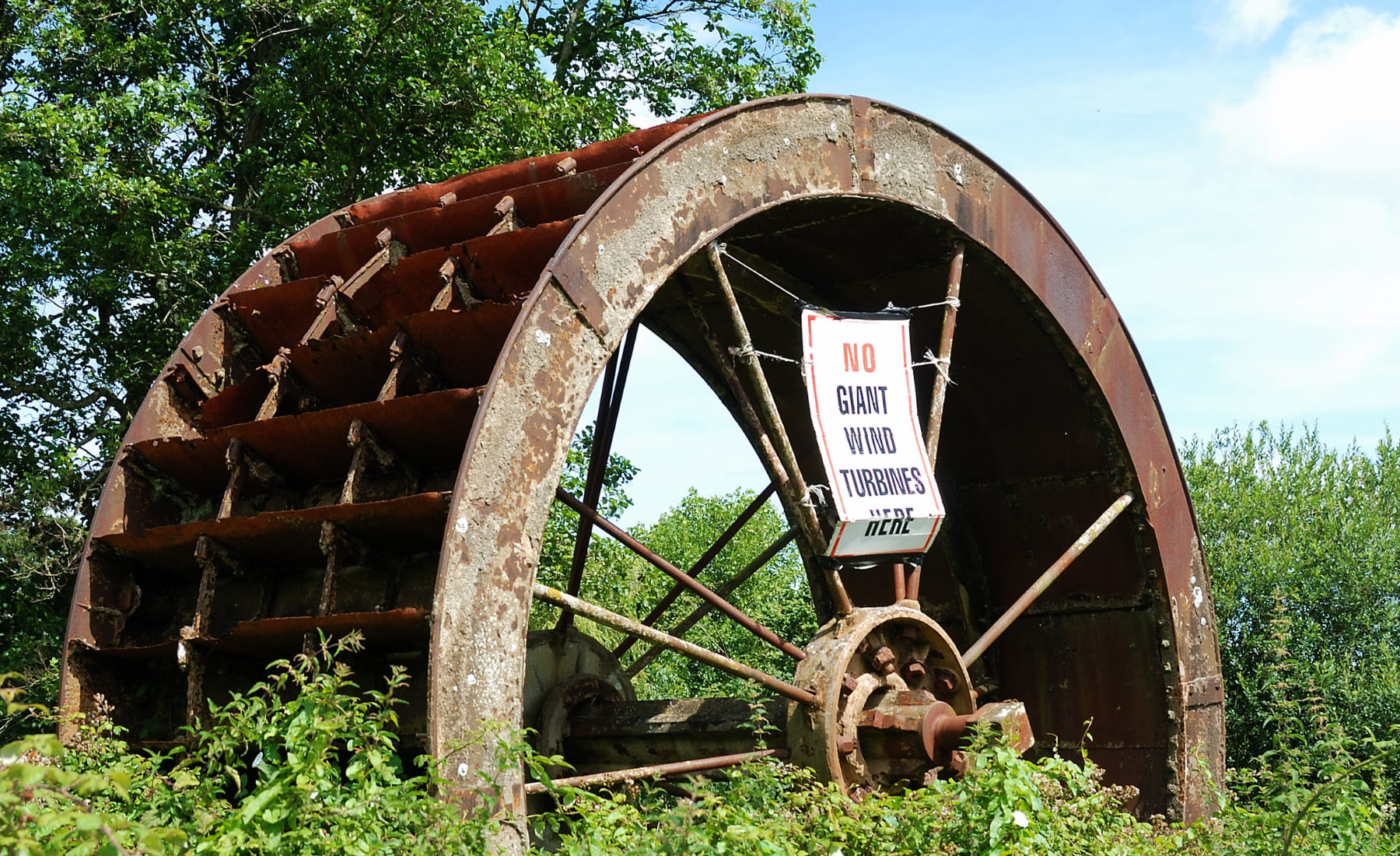
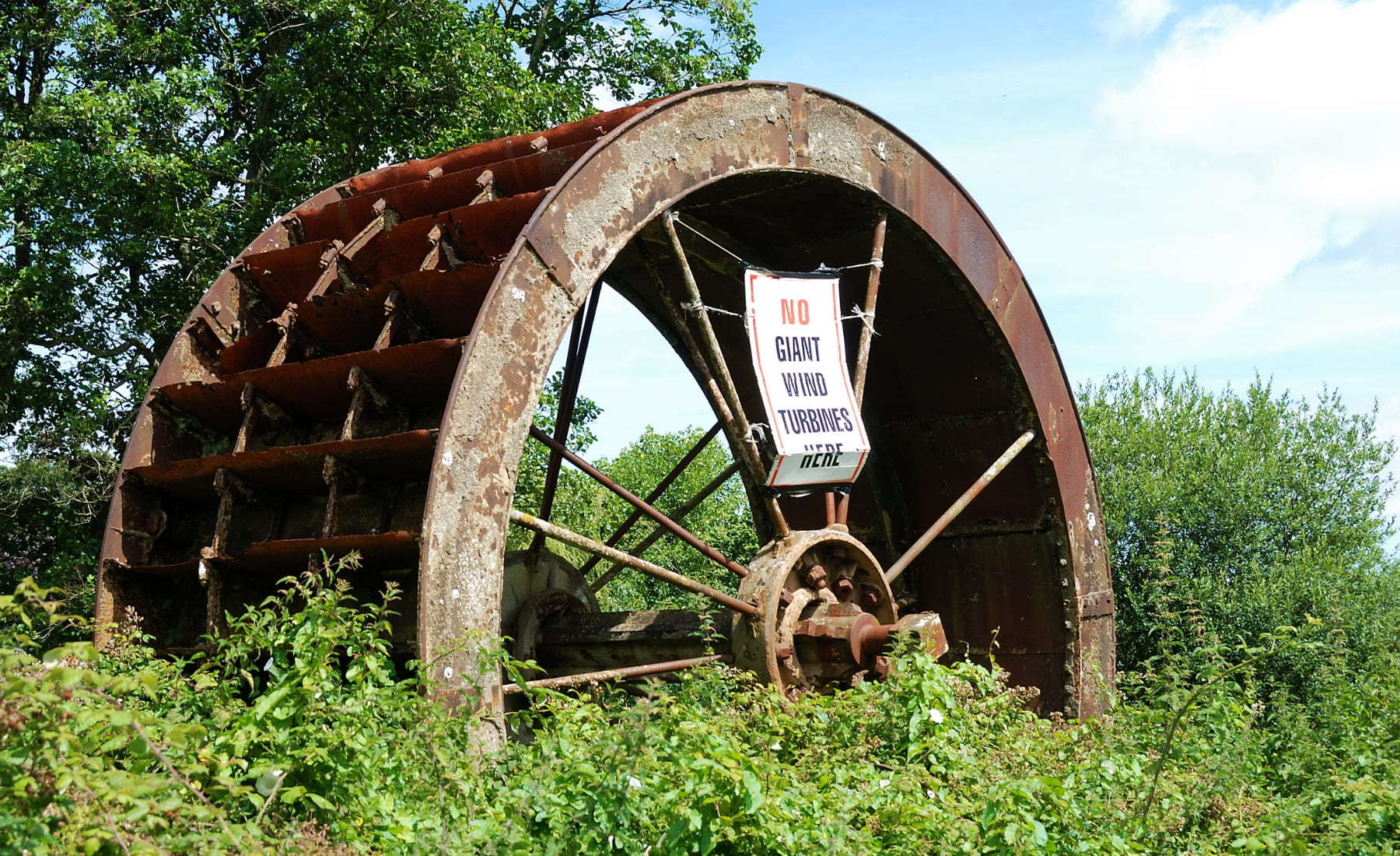
Local opposition is all too easily dismissed as Nimbyism egged on by bad-faith actors, but this does not tell the whole story.
The unavoidable visibility of the energy transition
We seldom stop to ask why. Local opposition is all too easily dismissed as Nimbyism egged on by bad-faith actors. But while these play a role, they do not tell the whole story.
Outside of mining communities and petroleum ports, for much of the last half-century in this country, energy was something that happened elsewhere: generated in distant power stations, extracted from far-off resources and delivered to consumers with no connection to the places that produced it. Renewable energy is changing that. Wind, solar and storage projects are bringing energy infrastructure back into our landscapes, making questions of land use, ownership, value and community benefit more visible than they have been for generations.
This shift creates both opportunities and tensions. Communities are being asked to host infrastructure while often having little confidence that they will benefit meaningfully. In that context, scepticism should not simply be dismissed. Instead, it presents an opportunity to open broader conversations about who owns and benefits from energy generation, how infrastructure can support local priorities, and how energy deployment can complement wider ambitions for land use and regeneration.
The history of the relationship between energy and land use
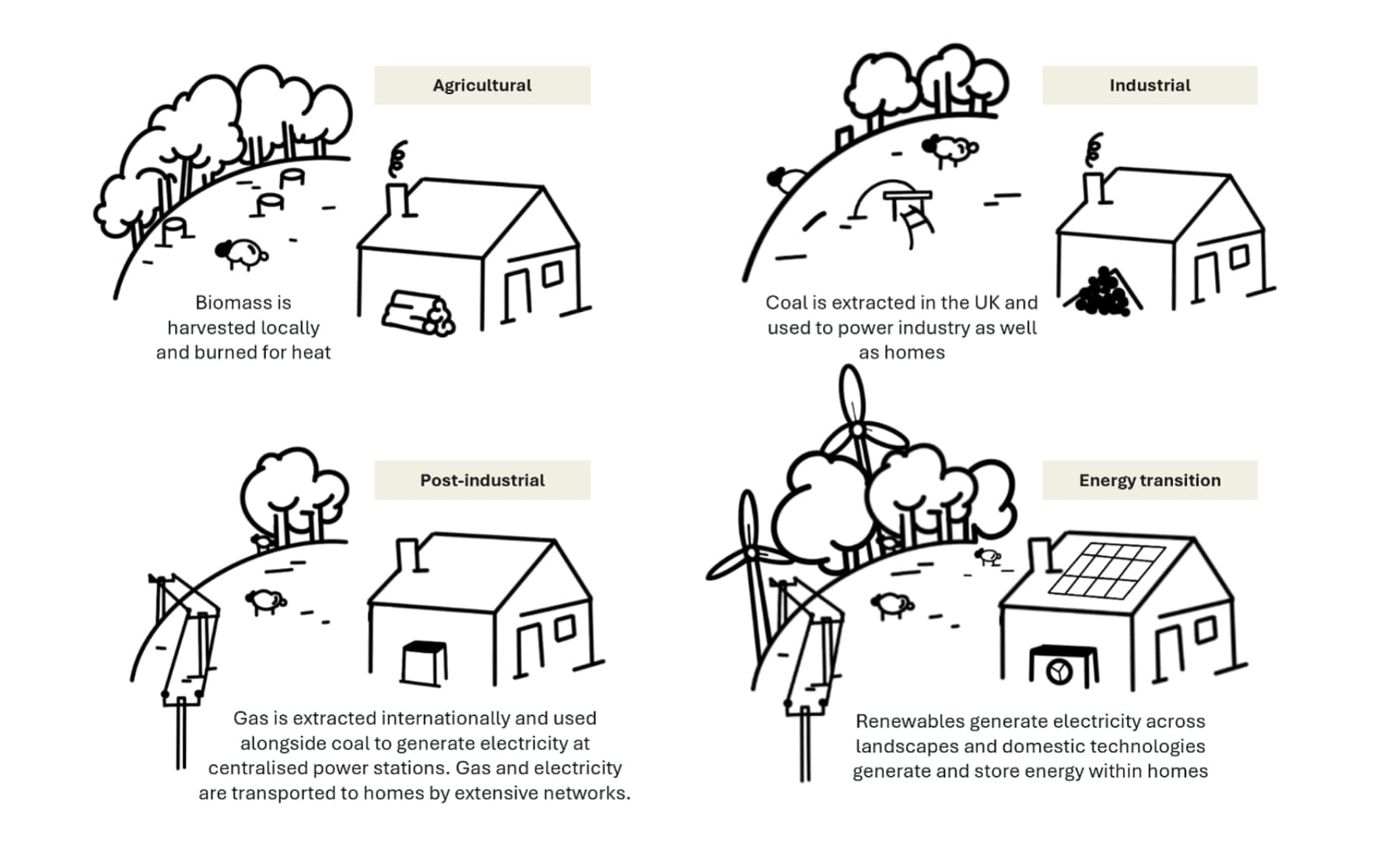
Throughout history, human societies have been heavily governed by the sources of energy available to them. Rolf Pieter Sieferle’s 2001 book The Subterranean Forest: Energy Systems and the Industrial Revolution examines human society’s changing relationship with energy. Broadly, the book discusses three distinct periods:
Hunter-gatherer: Humans were largely reliant on the flow of solar energy into biomass, which then became food or fuel. Solar and other forms of energy remained uncontrolled. These societies were defined by migration and the availability of sustenance in their chosen areas, and had to be more opportunistic in their harnessing of energy.
Agrarian/agricultural: The first agricultural revolution saw a transition from hunting and gathering to agriculture, settled in one place. We learned to grow and domesticate food and animals, increasing our collective ability to sustain larger groups. With the development of agriculture, humans started to reconfigure some of the natural flows of energy (e.g. through domesticating and growing monocultures of specific plants) to maximise biomass output and storage of food, fuel and building materials. This system remained reliant upon local ecological sustainability and often collapsed when the balance of these systems was broken.
Industrial: The advent of the industrial revolution saw the development of machines (in particular steam engines) that could make use of energy-dense fuel in the form of coal and turn this into useful output (work). The coal-based mechanisation of industry and agriculture in the UK eventually led to a surge in energy and material use per capita and per unit area. With economic growth a central focus, coal mines were opened up across the UK, field sizes were maximised, machinery was more heavily relied upon and, particularly post-war, industrial fertilisers were used to increase yields. This industrialisation has forged a close link between energy prices and the cost of food production that is now heavily reliant upon fossil fuels.
Over time, the relationship between humans, land use and energy has shifted from localised usage guided by the threat of scarcity and overexploitation to a globalised system, where resource extraction is often displaced from the end user.
The current energy transition marks yet another shift in the relationship between energy and land use. Distributed sources of energy generation and storage are returning to our landscapes, our seascapes and even our homes. This shift is being met in some quarters with opposition, with media narratives criticising the ‘industrialisation’ of our countryside. But this change can also be viewed as an opportunity to re-strengthen our relationships not only with energy, but also with land, food and community.
Over time, the relationship between humans, land use and energy has shifted.
Renewable energy as a catalyst for change in land use
The new Land Use Framework for England set out four key principles for land use, the first of which is multifunctionality: the idea that “land should be planned and managed to deliver greater benefits across a range of outcomes, tailored to local priorities and opportunities, societal needs and environmental pressures”. Applied to energy infrastructure, this principle sets a responsibility for renewables to do more than simply generating or storing energy and making profits.
There are already examples of renewable energy projects which are doing exactly this, delivering additional benefits which can be loosely grouped into food and resource production, nature and ecosystem resilience, and community ownership, capacity and empowerment. For each area, there remain significant questions and opportunities to scale impacts.
Although renewable energy infrastructure has a relatively small footprint in the UK, it is vital to acknowledge that the extraction of critical minerals such as zinc, lithium and silicon required to build turbines, batteries and solar panels also impacts land in other parts of the world. We shouldn’t overlook the importance of making supply chains transparent and ensuring methods of extraction are ethical and minimise harm to the environment. Developing circular supply chains, which reuse and recycle materials from components at the end of their lives, will also be key to alleviating pressure on natural resources and exploited communities.
Next steps
Our relationship with energy is changing. As the transition brings generation and storage infrastructure back into our landscapes, we have a chance to engage more directly with a system that used to be a core feature of local places. There is an opportunity for the wind turbines and solar farms that dot the landscape to be seen not as blots on valued views or intrusions on local land, but instead as enablers of land restoration, community empowerment, environmental restoration and local food security.
We are actively exploring further work in this space and are eager to hear your thoughts on this blog and the intersection of energy and land use more generally. Get in contact with Robbie Evans to discuss.





.jpg)
.jpg)
.jpg)