What’s in the package?
The government states that the following reforms will help overcome planning ‘blockers’ and speed the delivery of housing, infrastructure and energy projects:
- New ministerial powers. Ministers will be able to issue holding directions, preventing local councils from rejecting planning applications while the Secretary of State considers whether to call them in
- Changes to Natural England’s role. The agency will have discretion over which local authority queries it responds to, freeing resources for higher-priority cases and reducing routine delays
- A new Nature Restoration Fund. Allowing the Nature Restoration Fund to support the delivery of marine developments as well as those on land
- Streamlining measures. Stopping planning permissions from being timed out for approved major housing schemes facing lengthy judicial reviews, building on existing measures to cut back ‘meritless’ legal challenges for major infrastructure projects from three years to one year and slashing a year off the statutory pre-consultation period.
What does this mean for the renewables sector?
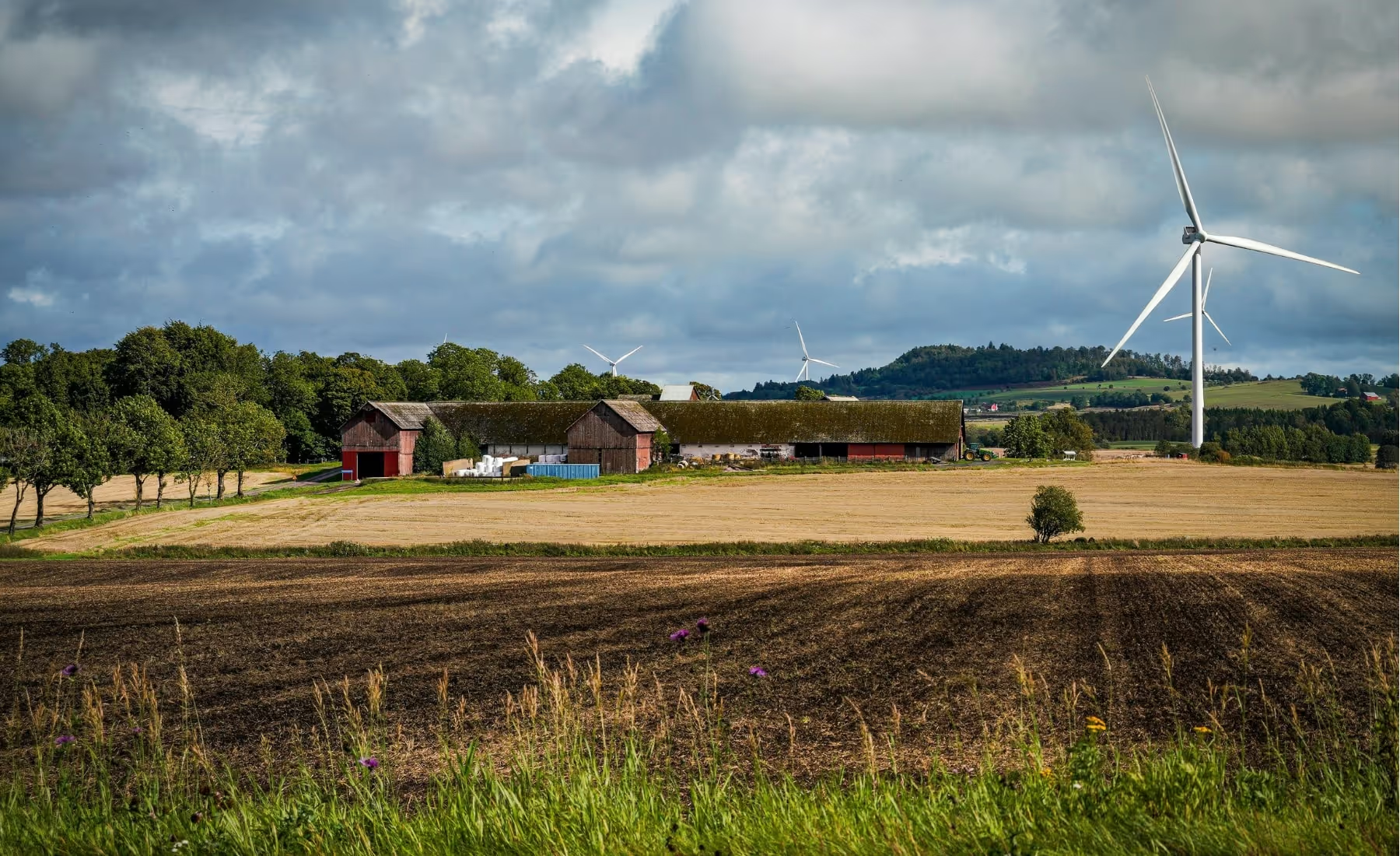
There’s a welcome focus on onshore wind. The package ‘aims to unlock around 3 GW of new capacity and £2 billion of additional investment’, however there is a lack of detail to support this statement. Speeding up the planning system is important, but it’s vital we get the balance right, ensuring local people have their say and share in the benefits of new projects. High-quality, early community engagement and meaningful benefits will be essential.
To deliver the pace of change needed, we also need to invest in local authority planning capacity – including training and retaining more local authority planners. This is particularly important as, from December 2025, all onshore wind and solar applications up to 100MW in England will be decided at the local authority level.
Careful implementation will be key
It’s encouraging to see the government recognising the need to accelerate clean energy deployment through the planning system. Regen has been highlighting the vital role that planning reform can play in unlocking the renewables we need, provided it’s implemented in a way that maintains environmental integrity and meaningful local involvement.
We are committed to working with government, industry and communities to ensure these changes can deliver positive outcomes for local communities.
We will be discussing these measures as well as the range of other changes to the planning system for renewables at the inaugural Regen Planning Conference in January. Register to join us here.