

Member Ticket £195.00 +VAT
Non Member Ticket £295.00 +VAT
Local Planning Authority Ticket 25% Discount £225.00 +VAT

Member Ticket £195.00 +VAT
Non Member Ticket £295.00 +VAT
Local Planning Authority Ticket 25% Discount £225.00 +VAT

Member Ticket £195.00 +VAT
Non Member Ticket £295.00 +VAT
Local Planning Authority Ticket 25% Discount £225.00 +VAT


.jpg)
The past year has been a landmark one for planning reform – and the pace of change is only set to accelerate in 2026. From the revised NPPF and the Planning and Infrastructure Bill to proposed changes in community benefit funds and shared ownership models, the planning landscape is shifting fast.
At the same time, the way we plan the UK’s energy system is undergoing a once-in-a-generation transformation. The development of the Strategic Spatial Energy Plan is redefining how renewable projects are sited and delivered. Coupled with the UK government’s Clean Power 2030 targets, this moment demands unprecedented levels of collaboration to unlock the clean generation, storage and transmission the UK needs.
Join developers, planning consultants, lawyers and policymakers for a focused one-day programme of insight, debate and networking. Together we’ll explore:
.avif)
Ben will kick off the conference by setting out the central role of the planning system in delivering CP30, as well as longer-term energy and climate targets. With a big government focus on planning reform over the past year, his keynote will address policy priorities and areas where further change will be needed to deliver at pace and scale beyond CP30, with particular relevance to planning.
.avif)
The Strategic Spatial Energy Plan (SSEP) is set to reshape how energy infrastructure is planned and delivered across the UK. This session will explore its potential impacts on developers, regulators, local communities and investors. Join industry leaders as they discuss opportunities, challenges and the sector-wide implications of spatially coordinated energy planning.
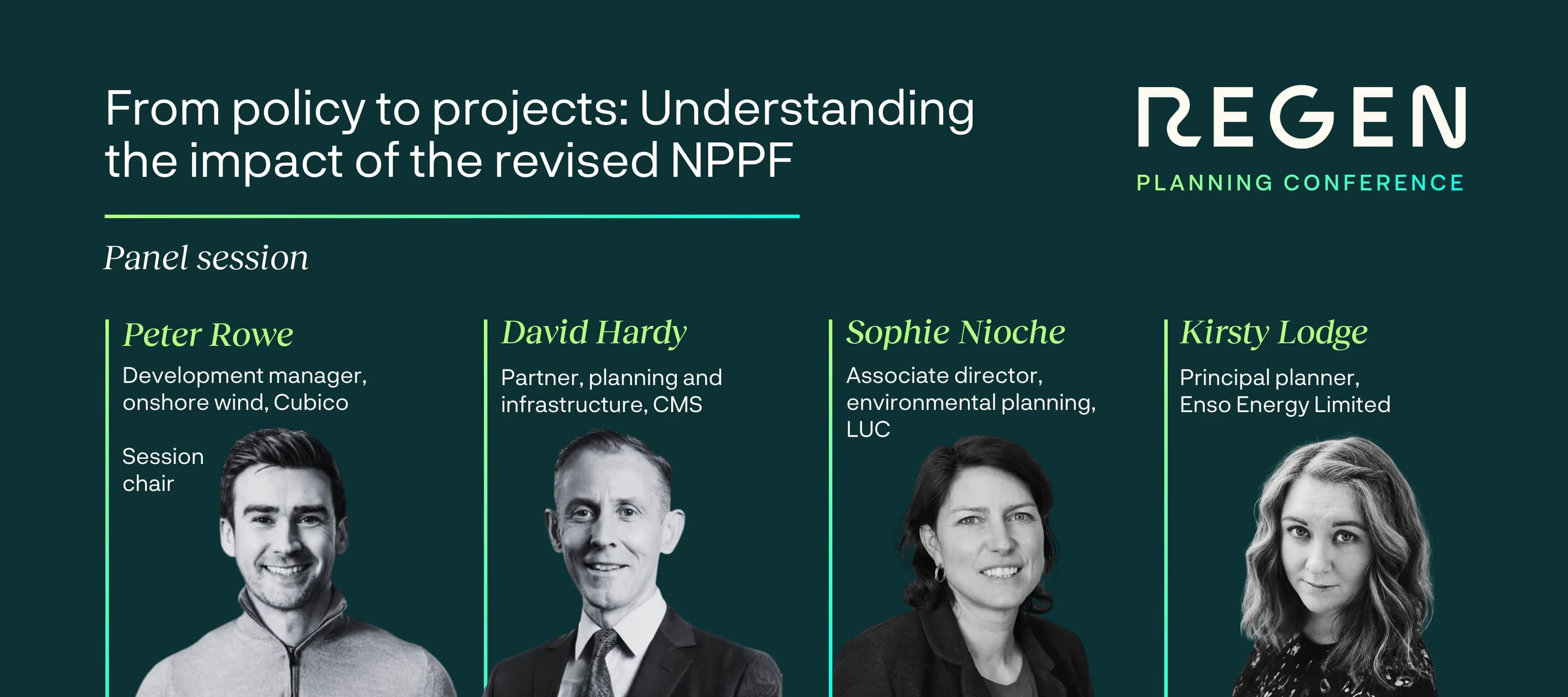
The latest National Planning Policy Framework (NPPF) reopened the door for onshore wind, introduced a new grey belt policy and proposed measures to accelerate renewable energy deployment, yet significant reforms are still needed to consent projects at the pace required. This session will explore the root causes of local delays and refusals, the systemic changes needed for a faster and fairer planning regime, and what an updated NPPF must include to help unlock delivery.
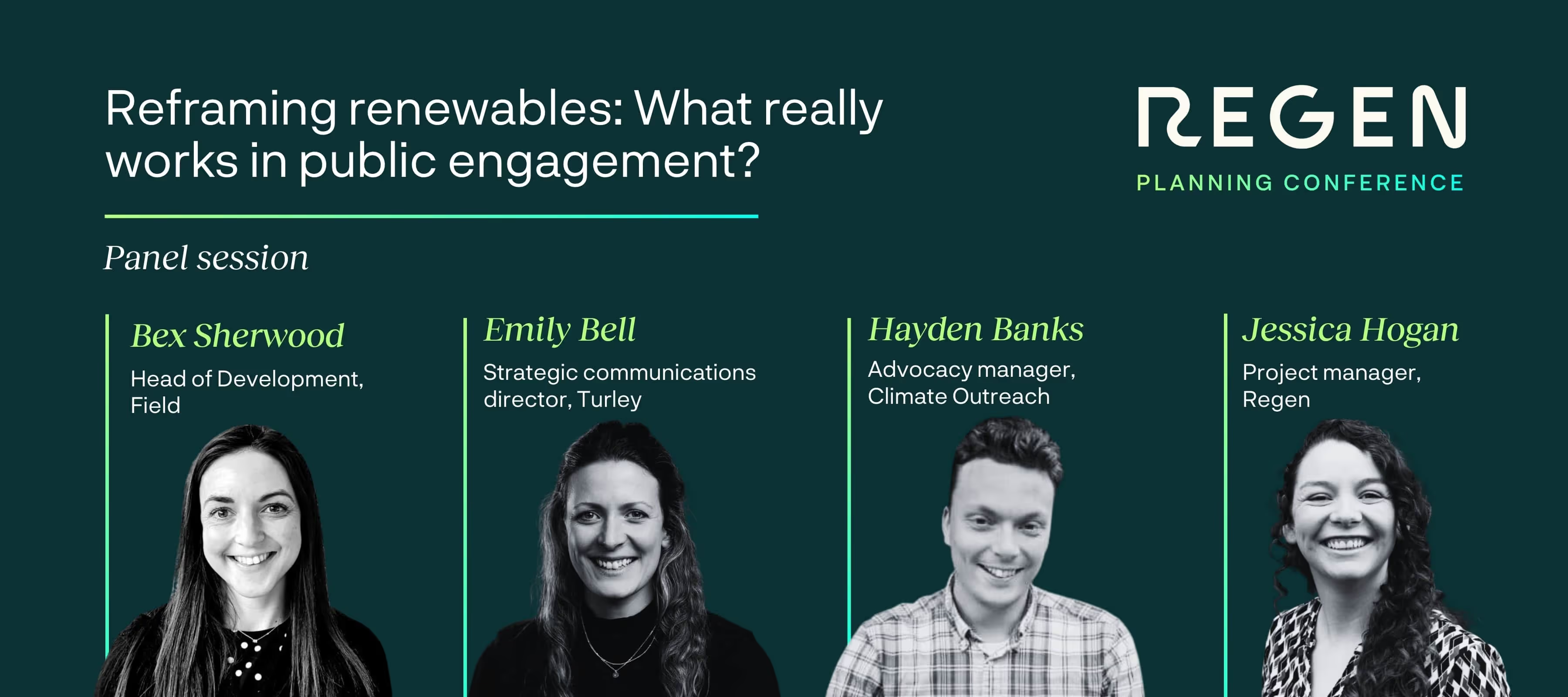
The biggest political risk to achieving our renewable energy targets isn’t technology or policy, it’s the story we tell about renewable energy. Projects don’t succeed on planning and regulation alone; they rely on public trust, clear communication and genuine community buy-in. Yet the messages that resonate with people are shifting. This session explores how we can rethink the way we talk about renewables.
.avif)
The Planning and Infrastructure Act aims to transform how we plan and deliver the infrastructure needed for net zero. This session will explore its key elements, potential impacts, and implications for the clean energy sector, as well as the additional changes needed to support the energy transition and maintain public trust.

Keynote: Planning and CP30
Panel session: Coordinating the future: How the SSEP will transform the energy system
Panel session: From policy to projects: Understanding the impact of the revised NPPF
Networking lunch
Panel session: Reframing renewables: What really works in public engagement
Panel session: The Planning and Infrastructure Act: Roadmap, risks and sector priorities
Closing reflections
Leading the way: Women in planning dinner (details tbc)
Keynote: Planning and CP30
Panel session: Coordinating the future: How the SSEP will transform the energy system
Panel session: From policy to projects: Understanding the impact of the revised NPPF
Networking lunch
Panel session: Reframing renewables: What really works in public engagement
Panel session: The Planning and Infrastructure Act: Roadmap, risks and sector priorities
Closing reflections
Leading the way: Women in planning dinner (details tbc)
The Electricity Storage Network Annual Conference is a platform for key industry players and policymakers to gather and debate what’s needed to attract and maintain the billions of pounds of investment required for this crucial asset class – from supportive policy and regulatory frameworks to shifting revenue strategies and evolving business models.
With over 5 GW of grid-scale battery storage operational and a 3 GW pipeline of new pumped hydro storage projects, plus other technologies in development, grid-scale electricity storage is established as key to a zero-carbon energy system – a testament to the success of our 100+ members.
And with an ambitious Clean Power 2030 action plan for accelerated clean power, against the backdrop of significant grid connection and market reform, and a long duration energy storage cap and floor scheme, the role of storage and flexibility is more important than ever.
At the ESN Annual Conference you’ll hear directly from our members and key decision makers from the Department for Energy Security and Net Zero, Ofgem and the National Energy System Operator on the latest changes across a range of topics critical to the storage sector, including Clean Power 2030, the revenue environment, long duration energy storage, grid connection reform and fire safety.
This is also an opportunity to learn about the ESN’s work to ensure policy, markets and regulation are geared to enable the storage sector to flourish and grow at the pace and scale required while networking with 300+ industry leaders in central London.
Keynote: Planning and CP30
Panel session: Coordinating the future: How the SSEP will transform the energy system
Panel session: From policy to projects: Understanding the impact of the revised NPPF
Networking lunch
Panel session: Reframing renewables: What really works in public engagement
Panel session: The Planning and Infrastructure Act: Roadmap, risks and sector priorities
Closing reflections
Leading the way: Women in planning dinner (details tbc)
Keynote: Planning and CP30
Panel session: Coordinating the future: How the SSEP will transform the energy system
Panel session: From policy to projects: Understanding the impact of the revised NPPF
Networking lunch
Panel session: Reframing renewables: What really works in public engagement
Panel session: The Planning and Infrastructure Act: Roadmap, risks and sector priorities
Closing reflections
Leading the way: Women in planning dinner (details tbc)
Keynote: Planning and CP30
Panel session: Coordinating the future: How the SSEP will transform the energy system
Panel session: From policy to projects: Understanding the impact of the revised NPPF
Networking lunch
Panel session: Reframing renewables: What really works in public engagement
Panel session: The Planning and Infrastructure Act: Roadmap, risks and sector priorities
Closing reflections
Leading the way: Women in planning dinner (details tbc)
Keynote: Planning and CP30
Panel session: Coordinating the future: How the SSEP will transform the energy system
Panel session: From policy to projects: Understanding the impact of the revised NPPF
Networking lunch
Panel session: Reframing renewables: What really works in public engagement
Panel session: The Planning and Infrastructure Act: Roadmap, risks and sector priorities
Closing reflections
Leading the way: Women in planning dinner (details tbc)
Keynote: Planning and CP30
Panel session: Coordinating the future: How the SSEP will transform the energy system
Panel session: From policy to projects: Understanding the impact of the revised NPPF
Networking lunch
Panel session: Reframing renewables: What really works in public engagement
Panel session: The Planning and Infrastructure Act: Roadmap, risks and sector priorities
Closing reflections
Leading the way: Women in planning dinner (details tbc)
Keynote: Planning and CP30
Panel session: Coordinating the future: How the SSEP will transform the energy system
Panel session: From policy to projects: Understanding the impact of the revised NPPF
Networking lunch
Panel session: Reframing renewables: What really works in public engagement
Panel session: The Planning and Infrastructure Act: Roadmap, risks and sector priorities
Closing reflections
Leading the way: Women in planning dinner (details tbc)
The past year has been a landmark one for planning reform – and the pace of change is only set to accelerate in 2026. From the revised NPPF and the Planning and Infrastructure Bill to proposed changes in community benefit funds and shared ownership models, the planning landscape is shifting fast.
At the same time, the way we plan the UK’s energy system is undergoing a once-in-a-generation transformation. The development of the Strategic Spatial Energy Plan is redefining how renewable projects are sited and delivered. Coupled with the UK government’s Clean Power 2030 targets, this moment demands unprecedented levels of collaboration to unlock the clean generation, storage and transmission the UK needs.
Join developers, planning consultants, lawyers and policymakers for a focused one-day programme of insight, debate and networking. Together we’ll explore:
Ben will kick off the conference by setting out the central role of the planning system in delivering CP30, as well as longer-term energy and climate targets. With a big government focus on planning reform over the past year, his keynote will address policy priorities and areas where further change will be needed to deliver at pace and scale beyond CP30, with particular relevance to planning.
The Strategic Spatial Energy Plan (SSEP) is set to reshape how energy infrastructure is planned and delivered across the UK. This session will explore its potential impacts on developers, regulators, local communities and investors. Join industry leaders as they discuss opportunities, challenges and the sector-wide implications of spatially coordinated energy planning.
The latest National Planning Policy Framework (NPPF) reopened the door for onshore wind, introduced a new grey belt policy and proposed measures to accelerate renewable energy deployment, yet significant reforms are still needed to consent projects at the pace required. This session will explore the root causes of local delays and refusals, the systemic changes needed for a faster and fairer planning regime, and what an updated NPPF must include to help unlock delivery.
The biggest political risk to achieving our renewable energy targets isn’t technology or policy, it’s the story we tell about renewable energy. Projects don’t succeed on planning and regulation alone; they rely on public trust, clear communication and genuine community buy-in. Yet the messages that resonate with people are shifting. This session explores how we can rethink the way we talk about renewables.
The Planning and Infrastructure Act aims to transform how we plan and deliver the infrastructure needed for net zero. This session will explore its key elements, potential impacts, and implications for the clean energy sector, as well as the additional changes needed to support the energy transition and maintain public trust.



If you're not sure which membership option is best for you, reach out to our stakeholder manager, Hannah Stanley.
Contact Hannah
If you're not sure which membership option is best for you, reach out to Olly Frankland.
Contact OllyVulputate fringilla felis ornare neque fusce platea egestas tellus. Aliquam eros urna sed in malesuada. Ullamcorper semper mus integer aliquet duis dignissim aliquet proin tristique. Porta sit urna cras auctor faucibus placerat auctor dictumst volutpat.
The Electricity Storage Network is the industry group for electricity storage in Great Britain. Managed by Regen, it brings together more than 100 organisations and 500 industry professionals who are working to develop, operate and supply storage in the GB market.



Rebecca leads our work on planning at Regen. She holds a PhD in environmental planning and has significant expertise in community benefits and community engagement for renewable energy projects. She is a recognised expert on planning for renewable energy and her research has been used to shape planning policy.
Rebecca’s recent work includes our Local Planning for Renewables paper and a project with the Royal Town Planning Institute exploring the links between Local Area Energy Planning and spatial planning. Rebecca also leads our members working group on planning.
Prior to joining Regen, Rebecca worked as a senior lecturer in environmental planning, where she designed and led masters-level teaching on renewable energy. She has won a number of awards for her work, including the Economic and Social Research Council Award for outstanding early career impact.
Rachel leads Regen's strategic partnerships and impact, cementing our position as a leading independent force shaping the strategic pathway to and delivery of a clean energy future. As a working mother, Rachel is passionate about diversity and spearheads the ReWiRE programme, championing inclusion by empowering women in the renewables sector and building a vibrant network.
After graduating, Rachel began her career in the environmental sector and held a variety of event management and communication roles, including organising the Tour of Britain. Joining Regen in 2009, Rachel is passionate about industry-wide change and influencing policy and has received a British Empire Medal for her services to the energy sector.
Growing up in Devon, Rachel loves being outside—at the beach, on the moor, or in the woods. You can find her horse riding, walking her dog Biscuit, or growing vegetables!
Bex is Head of Development at Field, leading the development of Field’s UK portfolio of BESS assets. Previously to BESS, her background is in offshore wind where she worked to secure consent on some of the world’s largest offshore wind farms, most recently with Vattenfall where she was Consents Manager for the Norfolk Zone.
Since joining Regen, Jessica's research has focused on community energy and achieving a just transition. She is particularly passionate about finding avenues to more meaningfully engage and bring communities along on the net zero journey.
Jessica holds a PhD in geography and sustainable development from the University of St Andrews, where she demonstrated how community ownership and local context influence acceptance of onshore wind energy projects in Scotland and Newfoundland, Canada. Drawing on this background, she leads Regen's stakeholder research support team, providing support and methodological guidance to ensure high-quality stakeholder research across projects.
When not working, Jessica can be found outside – usually spending time by the sea or hiking in the hills.
Over the past two decades, I've been involved in numerous transformative development projects across the UK, including major renewables projects. I bring a wealth of expertise in leading multi-disciplinary design teams, meeting financial objectives, providing strategic advice, devising innovative planning strategies, and nurturing robust stakeholder relationships. My passion for sustainable development is matched by my commitment to advancing the onshore wind energy agenda, reflecting my dedication to contributing to a greener future. I'm a Chartered Member of the Royal Town Planning Institute (RTPI).
Emily is a passionate communications leader, specialising in strategic communications, campaign delivery and social value creation for energy infrastructure. Emily has significant national experience crafting accessible communications strategies to make technically-driven development proposals relatable, driving engagement and building understanding in the face of rising misinformation and political division on the net zero agenda. Emily works for Turley, a team of trusted independent advisors that works collaboratively with clients to shape a more sustainable future.
Rob co-founded the E&I planning team in 2021. He advises on planning matters related to large infrastructure projects, working with Savills planning and environment colleagues.
Sophie has over 15 years of experience in project management with a particular focus on environmental impact assessment (EIA) for both renewable energy projects and large-scale commercial and residential land development projects.
Sophie takes a truly multi-disciplinary approach working in collaboration with the client, technical specialists, architects, planners, commercial managers, local planning authorities and consultees.
David Hardy is a Partner in planning practice at CMS, with over 25 years’ experience advising public and private sector clients on a range of planning issues. David specialises in contentious planning issues, environmental and compulsory purchase-related work and litigation and has appeared as advocate at more than 400 inquiries.
David has a particular interest and expertise in the renewable energy sector (including onshore wind, solar and biomass).
Kirsty is a Principal Planner at Enso Energy, one of the leading developers of renewable energy projects in the UK. Kirsty has over 12 years’ experience in delivering energy projects and is the DCO lead on the Helios Renewable Energy Project.
Hayden joined Climate Outreach in July 2025, helping to ensure Government, MPs and businesses meaningfully engage voters on the climate and energy transitions. Prior to joining Climate Outreach, Hayden led Public Affairs for the Refugee Council and provided the Secretariat for the All Party Parliamentary Group on Refugees. He also worked for fuel poverty charity National Energy Action during the height of the gas price crisis post-pandemic and has experience working in Parliament as a Researcher on Climate and Environmental issues. Hayden was inspired to work towards environmental justice after being involved with the Extinction Rebellion movement in 2019 and believes that involving communities and voters in decisions around our climate and energy is vital to secure a liveable future.
Since joining Regen in 2024, Holly has provided analysis and research on projects spanning planning policy, biomethane, social value from renewable projects and electricity networks.
Her background in environmental science has helped develop Regen’s work on broader aspects of the energy transition, including biodiversity, land use and the environment. As part of Innovate UK’s Net Zero Living project, she wrote a guide on the opportunities for integrating nature restoration with clean power projects.
Built and led a new "mission control" unit to co-ordinate and drive implementation of the Government's ambition to deliver clean power in Great Britain by 2030
Christian advises clients involved in energy transition and zero and low carbon technologies, particularly in relation to Nationally Significant Infrastructure Projects, and on environmental and climate change issues and opportunities which include natural capital opportunities.
Matt Browne is Head of Public Affairs for the Wildlife Trusts. He works with parliamentarians to make the case for nature recovery and to improve legislation so that it delivers better outcomes for wild species and habitats. His work is informed by a Westminster background, both as a former parliamentary researcher and as a policy staffer for a political party.
Jack has been a Deputy Director at Ofgem since November 2022, having previously worked in the private sector, focusing on wholesale, trading and distributed flexibility regulation. Jack’s current portfolio covers strategic system and network planning and electricity connections. Within this role he chairs the Connections Delivery Board, which holds delivery partners to account on actions to deliver connections reform.
A huge congratulations goes to all those shortlisted for the 2024 Green Energy Awards.