


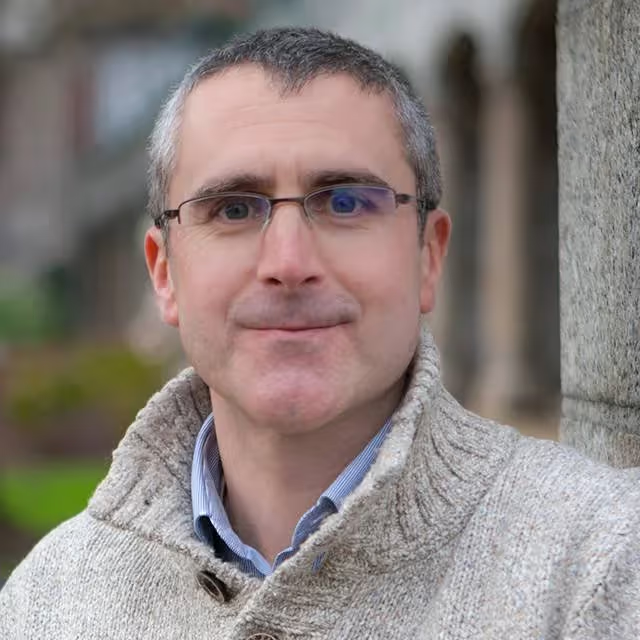


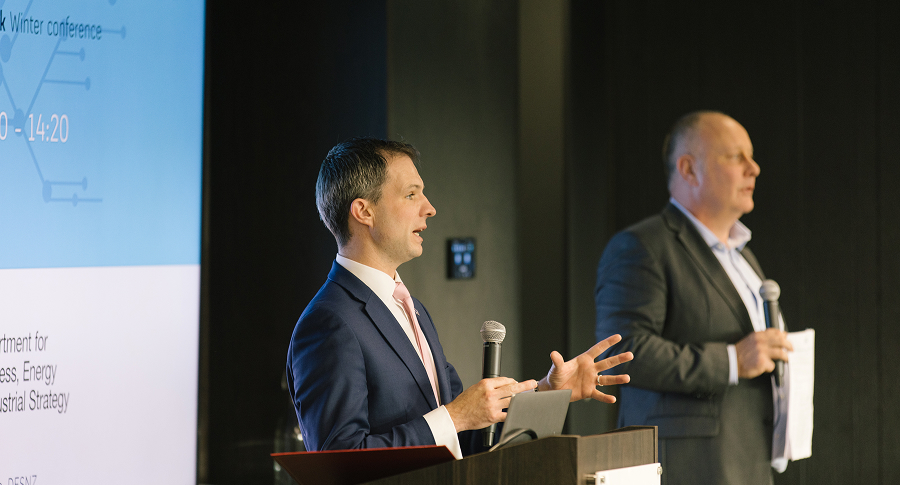
Reflections from Paul Hardman: Holding Space for Energy and Imagination
When the Regional Development Agencies were disbanded in 2011, few organisations survived the transition. Regen was one of the exceptions — thanks in no small part to the guidance and belief of people like Paul Hardman, then Energy Advisor at the South West RDA.
As Regen’s case officer, Paul helped navigate the organisation’s transformation from a publicly funded agency to an independent social enterprise. But his connection went deeper than contracts and KPIs. Long train journeys with Regen’s Chloë Uden often became rolling creative labs — exploring how art could change behaviour, influence values, and bring hope into the dry world of policy and planning.
“I remember those journeys vividly,” Paul says. “We spent hours bouncing ideas about how art might engage people at a deeper level — it felt innovative, full of hope and possibility.”
That sense of possibility seeded Regen’s first forays into art: working with poet Matt Harvey, commissioning artist Siddy Langley to make Green Energy Awards trophies, and eventually inspiring the creation of The Art and Energy Collective.
From Policy to Poetry
Paul later moved to the University of Plymouth, managing the Sustainable Earth Institute (SEI). There, inspired by those early conversations, he built creative engagement into the DNA of research through the Creative Associates programme — pairing artists with scientists to communicate complex ideas through art, sound, photography, and film.
“It wasn’t just about making something beautiful,” Paul reflects. “It was about breaking down barriers — helping researchers and artists see the world through each other’s eyes. The real learning wasn’t just the artwork, but the process itself.”
These collaborations ranged from animations showing the mineral footprint of mobile phones, to photographers documenting soil degradation in Africa alongside geographers. They revealed how creative partnerships could generate fresh understanding, not only for the public but for the researchers themselves.
“Innovation often happens in the spaces between disciplines,” Paul says. “When you mix art, science, and engineering, new ways of thinking emerge. That’s where creativity — and change — begin.”
Creating the Conditions for Connection
Paul and the SEI’s later work — from Low Carbon Devon, Feasts for the Future with Professor David Sergeant, to the Net Zero Visions murals across Communities — continued this theme: creativity as a tool for connection and hope.
“Art brings people together around something bigger than themselves,” he says. “When you walk past a mural every day that imagines a hopeful future, that hope seeps into your bones.”
Asked how he consistently brings people together across disciplines, Paul smiles.
“I used to think it was tea and biscuits. Now I think it’s about helping people into a parasympathetic state — where they feel safe enough to share ideas. You create the right space, then sparks fly.”
But he’s quick to add that this isn’t just about inspiration.
“The energy of that first moment needs to be nurtured. Follow-up matters. Sometimes you have to paddle a bit — help with the admin, hold the container — before the wave catches and the project takes on a life of its own.”
Energy at Every Level
Paul sees energy — in all its forms — as a unifying thread connecting people, systems, and ideas.
“There’s energy in the physical sense, but also in people, between people, in creativity. When those energies meet, one plus one doesn’t equal two — it equals ten.”
For Paul, this connection isn’t just metaphorical. Having spent years working across the renewable energy sector — from early policy design and regional investment to innovation and behaviour change — he understands that the technical and the human are inseparable.
“Renewable generation, energy efficiency, transmission networks — they’re all systems designed to move power from one place to another,” he explains. “But collaboration, motivation, and imagination are also forms of transmission. They’re the circuits through which ideas, values, and purpose flow.”
He believes that creativity acts like the inverter between these systems — converting the raw potential of human emotion and curiosity into the kind of collaborative energy that drives transformation. “If we want to decarbonise,” he says, “we need both the kilowatts and the kind of emotional wattage that keeps people inspired to act.”
Through his roles with Regen, the Sustainable Earth Institute, Low Carbon Devon and now as a Director of The Art and Energy Collective, Paul has become a quiet architect of this energetic ecology — where technical expertise meets emotional intelligence. He believes the success of creative energy initiatives lies in trusting where the energy is — following the flow rather than forcing outcomes, and nurturing the spark wherever it appears.
“A small amount of funding can unlock an enormous amount of creativity,” he observes. “People give so much of themselves to art projects because they feed something deeper — they bring joy, meaning, and connection, which is what sustains us.”
Looking Ahead
Now developing his own consultancy, People and Planet Consulting, Paul continues to explore how creativity can strengthen climate communication and engagement. He’s particularly interested in how art can help translate the abstract idea of net zero into something that connects emotionally — through nature, storytelling, and local action.
“If people really understood the depth of the climate challenge, they’d act differently,” he says. “Art helps us feel that truth, not just know it.”
From helping Regen survive its earliest transitions to shaping the next generation of creative engagement programmes, Paul Hardman has consistently brought structure to imagination and imagination to structure — proving that the space where art and energy meet isn’t just creative, it’s generative.



