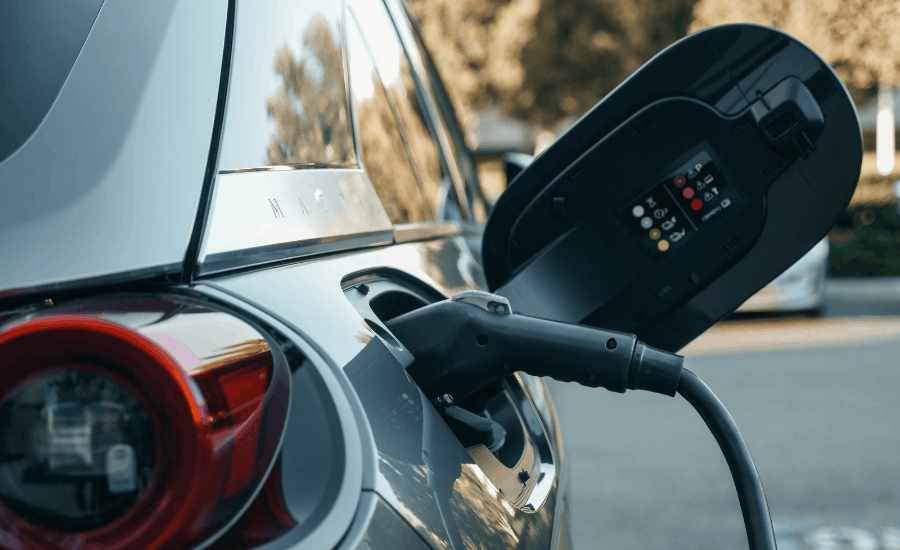
The Zero Emission Vehicle mandate review by the Department for Transport seeks to gather views and evidence on the effectiveness of current measures and new measures that could be introduced to support EV uptake. Our response focuses on three key areas where we believe that the government could improve their current policies to support uptake: Electric Vehicle Excise Duty (eVED), public charging costs and pavement gully chargers. Regen recognises the important role that public chargers and cross-pavement charging solutions play in many people’s decisions to buy an EV, and believes the government could do more to reduce costs in these areas. Current measures do not adequately address these challenges, which are causing a driveway divide in the UK, where those without access to off-street parking pay disproportionately higher costs to charge their cars. We also believe that creating a strong market for EVs today will support households in the long run by creating a strong second-hand EV market, in turn allowing more households to benefit.
Electric Vehicle Excise Duty
Our response recommends that the government should delay its plans to introduce the pay-per-mile eVED until 2030, after the proposed date for phasing out the sale of new internal combustion engine cars. Polling suggests that running costs are the second most important factor considered when buying a used car, and that drivers relying on public chargers are already paying around 16 pence per mile to charge their vehicles. Based on current estimates that a petrol car costs 17 pence per mile, this means that EVs risk becoming the less economical option for those who cannot benefit from cheaper domestic charging.
Reducing public charging costs
Regen recommends that the government could tackle high public charging costs through two measures: reducing the VAT on public charging to 0%, in line with domestic charging, and simplifying network charges for charge point operators (CPOs).
Based on the Zapmap price index, public chargers under 50 kW cost 54 p/kWh on average, meaning drivers are paying 9 p/kWh in VAT on their public charging costs (equivalent to 3p/mile at an efficiency of 0.3 kWh/mile). Regen recommends that VAT on public charging should be reduced from 20% to 0%.
This expense is also currently combined with disproportionately high standing and capacity charges levied on charge point operators following Ofgem's Targeted Charging Review. These changes have resulted in CPOs paying penalties for sizing their grid connections in anticipation of future demand, the costs of which have caused average public charging prices to rise by 38% between 2021 and 2025 according to research by Charge UK. While there are proposed code changes to the Distribution Connection and Use of System Agreement (DCP420 and DCP454) to tackle this, enduring relief may not be implemented until April 2028. Regen therefore recommends that the government should work with Ofgem to prioritise these reforms, and bring down the cost of standing charges for CPOs.
Removing barriers for pavement gully charging solutions
Currently, pavement gullies are permitted developments across most of the UK, however homes in conservation areas are required to submit full applications for planning permission, in which case councils can still refuse or restrict gullies for several reasons. Regen recommends that permitted development status for gullies be extended to conservation areas, and that, where reviews are needed, local authorities can only reject applications with strong justification.