


As we approach a major shift in energy planning, Ray Arrell reflects on 10 years of Distribution Future Energy Scenarios, and how they have evolved to become a detailed, bottom-up approach to developing regional and localised network plans.


As we approach a major shift in energy planning, Ray Arrell reflects on 10 years of Distribution Future Energy Scenarios, and how they have evolved to become a detailed, bottom-up approach to developing regional and localised network plans.
In 2015, at the height of the Feed-in Tariff incentive programme, the electricity network in the South West region became highly constrained for new generation projects. Working in partnership with Western Power Distribution (WPD, now National Grid Electricity Distribution/NGED), Regen pioneered an approach to produce the first set of regional distribution network scenario projections for key electricity generation and demand technologies.
The method Regen developed was grounded in the physical characteristics, resources and levels of ambition of stakeholders in the South West region, but was presented through the lens of the Future Energy Scenarios (FES), as a recognised and defined national scenario framework.
WPD/NGED and Regen worked in partnership to rapidly evolve the process into an annual analysis for each of their distribution network licence areas. From 2017, Regen also worked with Scottish and Southern Electricity Networks’ (SSEN) two licence areas, adapting the process to take account of their unique characteristics (including the north of Scotland).
With other DNOs adopting similar methods to develop evidence-based, long-term views of project connections and load growth, the Distribution Future Energy Scenarios (DFES), as it was quickly named, evolved continuously over the next nine or ten years. Perhaps most importantly, electricity networks developed methods to project the take up of low-carbon technologies such as heat pumps and EV chargers down to low voltage (LV) level. DNOs have also invested lots of work and time in engaging effectively with local authorities and other stakeholders on their plans.
Wind the clock forward to 2025, 10 years after the first study in the South West began, the DFES has become one of the most successful innovations in network planning, adopted by all electricity DNOs in some form. DFES has provided bottom-up reconciliation and feedback loops with the national FES framework, as well as establishing methods to reflect local/regional stakeholder projects, data, input, ambition and feedback into network planning.
The DFES now acts as the initial step in the strategic network planning process for DNOs, producing future capacity projections that are translated into network asset impact analysis, optioneering, network development plans and capital engineering projects for new substations and network lines.
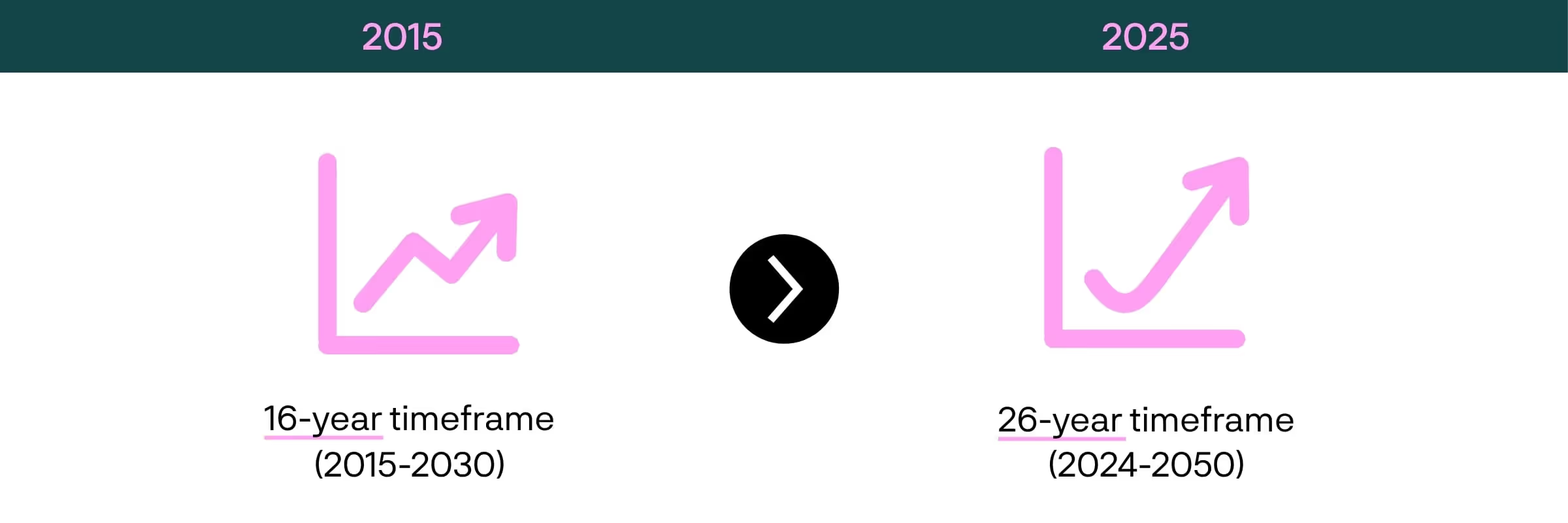

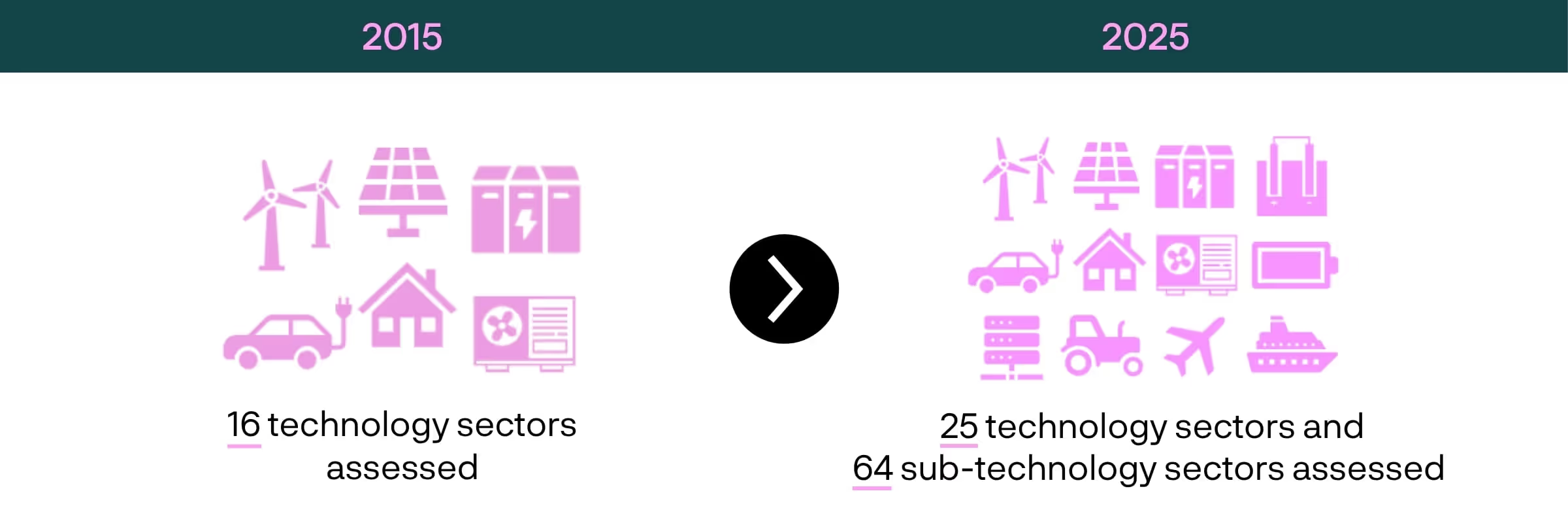
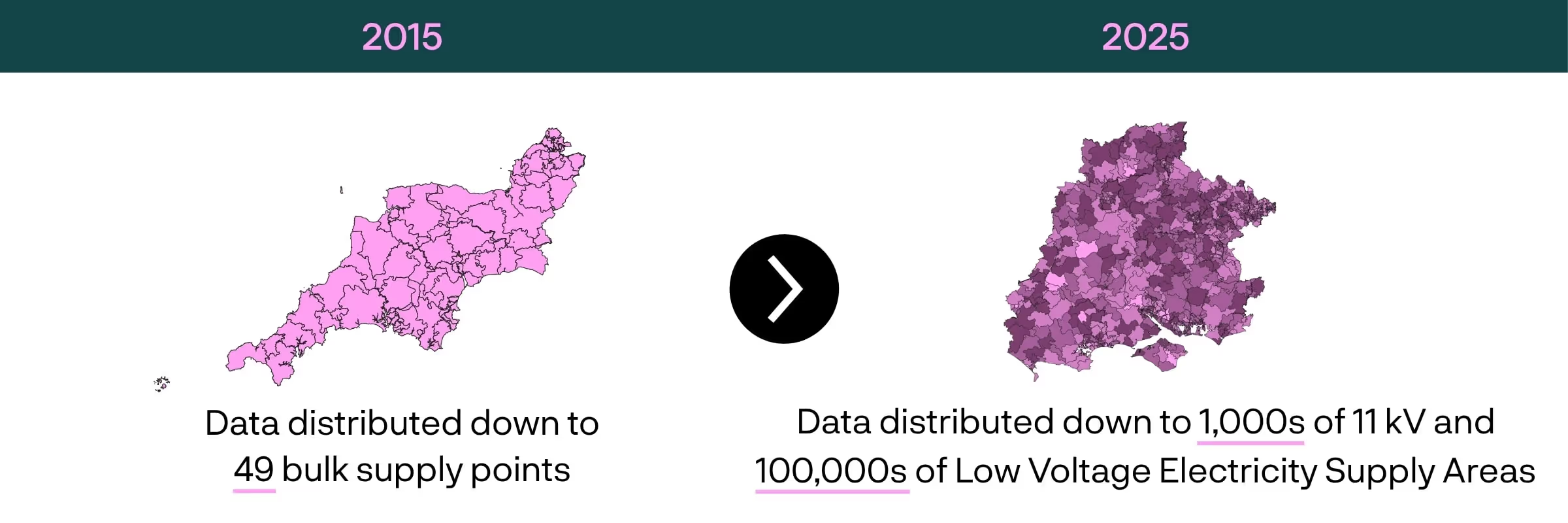
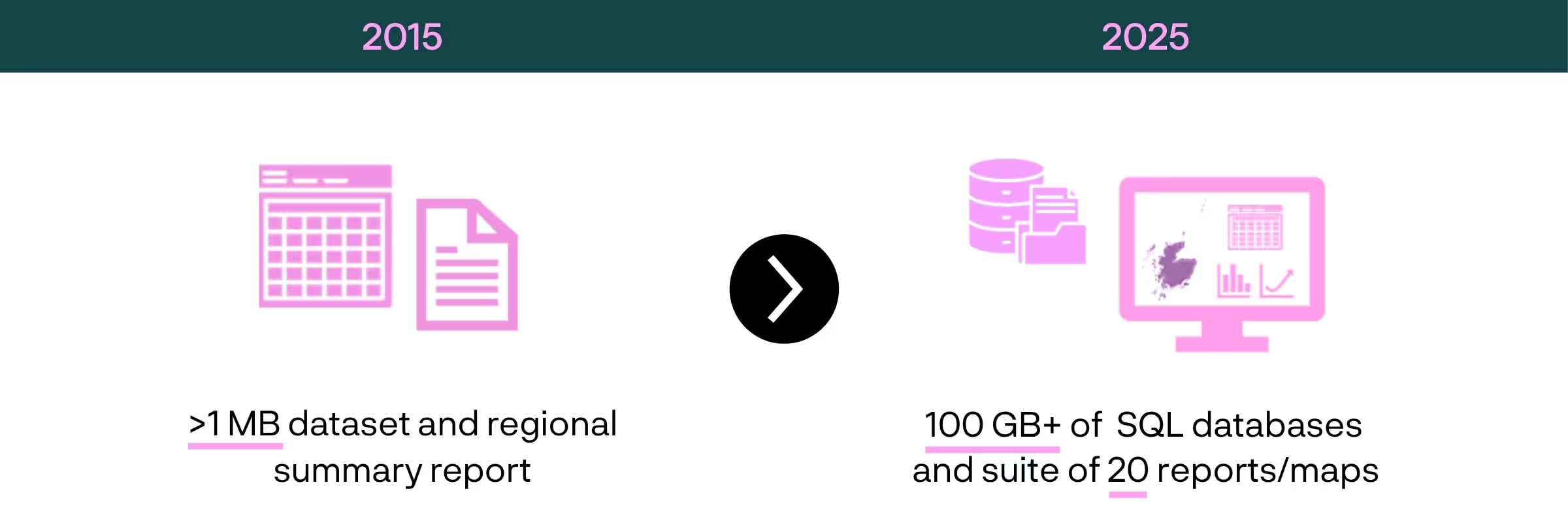
From the outset, the DFES process has been designed to be agile and adaptive to evolving policy changes, market activities, shifts in investment and new technology developments. Whether it’s the introduction of the Zero Emissions Vehicle mandate, the development of Local Area Energy Plans or the surge growth of data centre connections, the granular nature of the DFES method allowed for disruptive changes in our energy system to be indirectly or directly considered and reflected down to HV/LV substation asset level.
The overarching FES framework and broader societal, economic and technological assumptions that have underpinned the DFES analysis have also significantly evolved. The underlying ‘axes’ that the FES scenarios have been framed against having shifted notably:
Viewing the evolution of the FES and DFES is an interesting reflection of the parallel evolution of energy policy, government prioritisation of decarbonisation and the level of progress that has been achieved across multiple technology sectors. The FES 2025: Pathways to net zero was launched by NESO in London in July 2025.
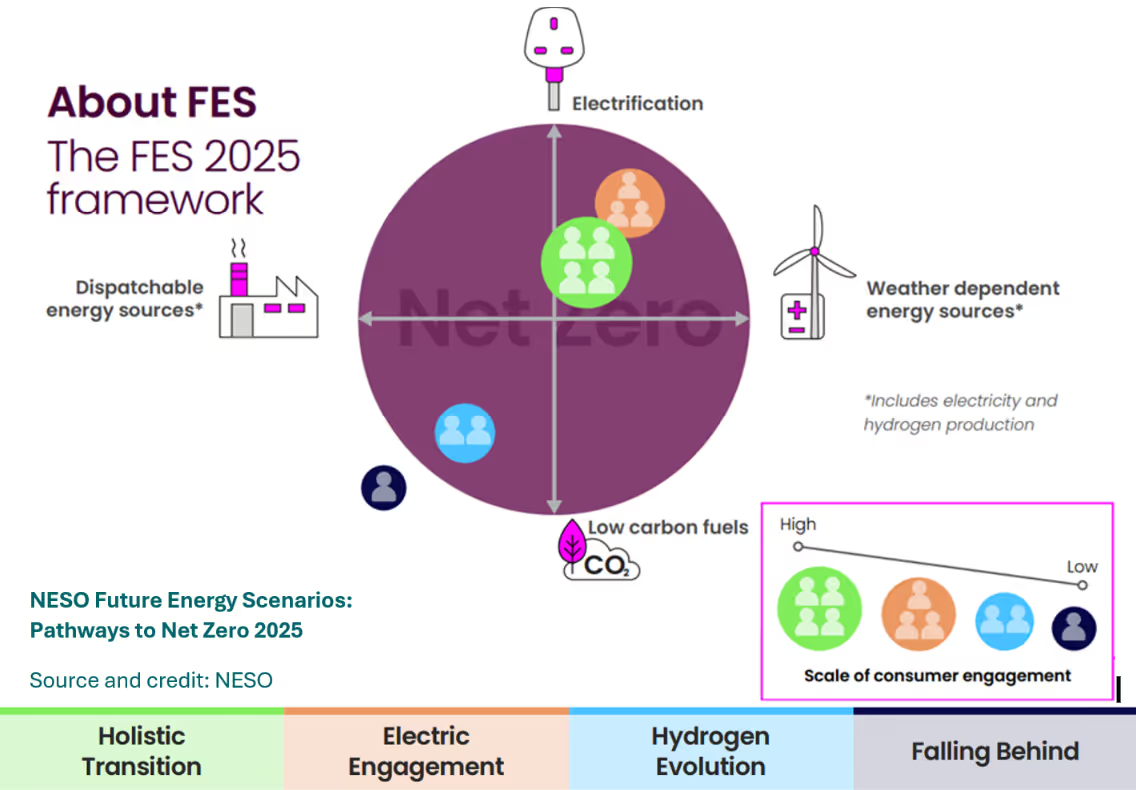

The appointment of NESO to deliver a Strategic Spatial Energy Plan (SSEP) and Regional Energy Strategic Plans (RESPs) signals a new era of coordinated, centralised approaches to defining regional energy priorities and, by definition, regional and local energy network investment planning. The detail of the enduring RESP process and outputs is yet to be fully defined. 2025 is also a very transformative year, with the DFES methodology adapting to work with the first iteration of the RESPs, due to be published as the transitional RESP (tRESP) in 2026. We are already underway with fast-tracked analysis to inform DNO ED3 business plans, as well as supporting the development and implementation of RESPs.
As defined by Ofgem, the key objectives for RESPs are to:
The intention is for RESPs to be published every three years, directly linked to the SSEP/CSNP, and likely also aligned to the national FES pathways at a GB level.
There is a key question around what additional analysis or validation energy network companies should be doing around the 3-yearly publication of the FES, SSEP and RESPs and in the interim years. From delivering annual DFES assessments for the same licence area geographies for many years, it is clear that defined pathways will need to be adapted and updated to reflect within-year changes, disruptive sector shifts or new policies being implemented on a rolling basis.
This could, in turn, create a more dynamic or rolling approach to triggering updates, creating a ‘living’ data capture environment, and identifying key points to reactively re-baseline, reassess or refresh near-term pathways for particular technology/sub-technology forecasts.
DNOs will also need to continue to carry out assessments of technologies outside the RESP scope. Industrial demand, for example, will not be covered but could increase significantly as processes are electrified – encouraged by the recent government announcements on reducing industrial electricity costs. Regen has developed methodologies for forecasting demand from specific sectors, from agriculture to maritime port electrification.
Perhaps most importantly, DNOs will continue to need to understand technology pathways at a more granular level than RESP will provide – translating forecasts down to LV feeder level for technologies like heat pumps and EV chargers.
Regen remains closely engaged with the implementation of both the tRESP and enduring RESP processes and outputs that NESO are progressing. We are already working with DNO network planning teams to consider how DFES-style analysis will need to evolve in the future. We are committed to ensuring that any ongoing analysis continues to add value and reflects timely local data, ambition and market developments, while maintaining cohesive alignment with the regional and national planning approaches being led by NESO.
Regen would like to thank the hundreds (if not thousands) of organisations and individuals that have engaged, provided data, insights, challenge or feedback over the past 10 years of delivering DFES work with NGED and SSEN. Without tangible, place-based information, these ‘bottom-up’ assessments could not have been as truly reflective of local characteristics and priorities as they have been.
We look forward to continuing to work with energy networks, local authorities and other stakeholders, to ensure we prepare and invest to enable a clean power and net zero energy system to be delivered cost effectively and efficiently.



