


As part of our DFES work for SSEN, we developed new 'vulnerability and just transition' scenarios that support more targeted investment ahead of need in lower-income areas.


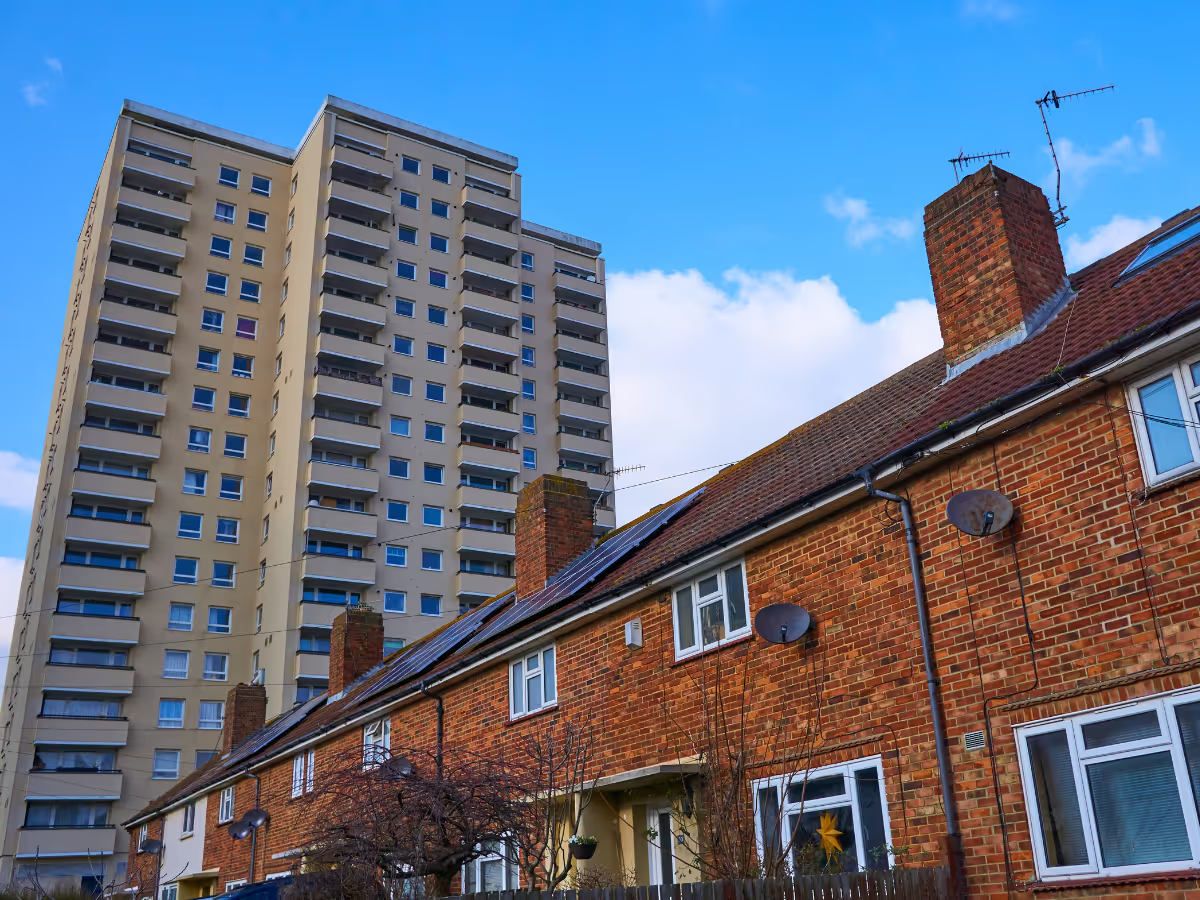


As part of our DFES work for SSEN, we developed new 'vulnerability and just transition' scenarios that support more targeted investment ahead of need in lower-income areas.
Energy network companies have a key role to play in delivering a just transition to a clean energy system. Over the coming decades, they will invest billions to upgrade the cables and substations to make sure we can all connect our heat pumps, electric vehicle chargers and other low-carbon technologies.
As networks plan for where and when to invest in this infrastructure, various assumptions are made which influence how 'fair' the net zero transition could be. For example, if investment is prioritised predominantly in more affluent areas, where people can afford to buy heat pumps and EVs, there is a risk that lower-income households or those in vulnerable situations end up locked out of the transition, leaving them exposed to potential price volatility, resilience issues and rising fossil fuel infrastructure costs.
As part of the Distribution Future Energy Scenarios (DFES) work we carry out for distribution networks, we've pioneered a process to model potential load growth down to the low-voltage network level. This includes detailed assessment of where low-carbon technologies could be taken up, and by when.
For Scottish and Southern Electricity Networks' 2023 DFES, we undertook a parallel study to develop scenarios that support more targeted investment ahead of need in vulnerable and lower-income areas, and consider how energy networks can better plan for a fairer energy future.
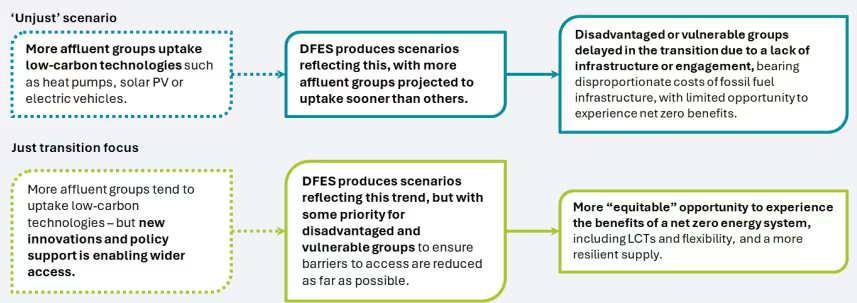
This pioneering work included:
As a result of this work, we've made the following recommendations:
Andy Wainwright, DSO whole systems manager at SSEN Distribution, said:
We're now moving forward with a number of recommendations in the report. We're embedding the just transition within our strategic development process, we're engaging more with our stakeholders in the development of forthcoming DFES, and we're understanding how Regen's modelling and insights could be used more widely.
Regen is delighted to see SSEN commit to action on these recommendations and welcomes discussions with others in the sector for how we can progress this further and ensure that the just transition is built in to a clean energy system from the ground floor.
You can read SSEN's article here.



