Local planning policies for renewable energy are often critiqued for being outdated and creating unintended consequences. In our latest paper for Innovate UK's Net Zero Living Programme, we examined the policies in all local plans across England, with startling results.
“A landscape of chaos” is how one local authority planner described the current patchwork of renewable energy policies in local plans across England. It’s a sentiment echoed by developers and planners alike, capturing the frustration, delay and uncertainty caused by the lack of clarity and consistency in local planning policy.
Against this backdrop, Regen has been working on an Innovate UK-funded project as part of the Net Zero Living Programme. Our aim: to understand the true state of renewable energy planning policies at the local level and consider what it means for the UK’s renewable energy ambitions.
To build an accurate picture, we assessed the renewable energy content of every local plan in England, just under 300 in total. The results are stark.
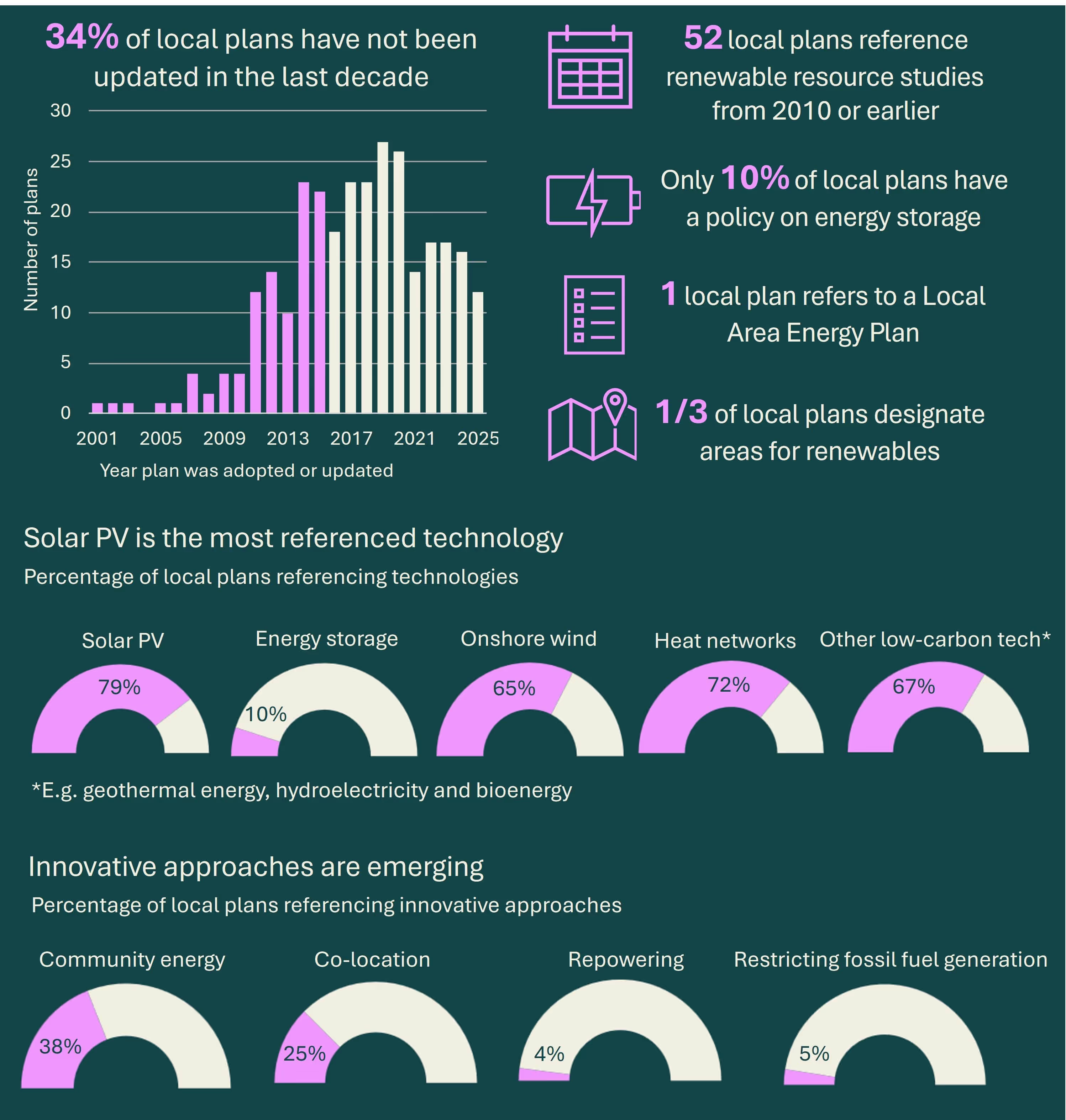
A third of local authorities in England (34%) have not reviewed their energy planning policies for over a decade
Across England, 74% of local authorities have a local plan that was adopted or updated more than five years ago, and 34% have plans over 10 years old.
Evidence is also often outdated, with 52 local plans referencing studies from 2010 or earlier and an additional 52 referencing studies from 2015 or earlier.
This is leaving local plans misaligned with both technological advances and national priorities for clean energy.
Only 10% of local plans include a dedicated policy on energy storage
Many policies are not reflecting current industry standards. Alongside the small number of local plans with a policy on energy storage, only 4% have a policy on repowering (replacing older infrastructure with new) and just 5% have a policy explicitly restricting fossil fuel energy generation. This gap shows how quickly local plans have fallen behind the pace of change in the energy sector.
A third of local plans allocate specific areas for renewable energy, but these often limit opportunity rather than unlock it
Site allocations frequently create barriers rather than opportunities. Strict criteria, outdated assumptions or changes in land use can make designated sites unviable, while policies often restrict development outside these zones.
Additionally, restrictive policy wording presents a key challenge. Many policies start with supportive statements on renewables, only to follow them with detailed conditions that make projects difficult to approve.
Climate commitments rarely translate into planning action
While 64% of local plans reference a climate strategy or Climate Emergency declaration, few translate these commitments into measurable emissions or clean energy targets that guide actual planning decisions.
So, what should happen next?
To unlock the local planning system’s potential to support clean energy, Regen recommends the following actions for the Ministry of Housing, Communities and Local Government (MHCLG):
1. Create a faster route to update renewable energy policies
Local authorities need a mechanism to update energy policies without waiting for a full local plan review.
Targeted Development Plan Documents (like those used in Cornwall) offer one option. MHCLG should explore this and other mechanisms, alongside providing clear guidance and training to help authorities use them.
2. Deliver clear guidance to support local authorities
MHCLG should set out what an enabling renewable energy policy looks like, supported by training, peer learning and resourcing to equip planning teams to respond to rapid technological and policy change.
3. Ensure that national planning policy provides clarity on the weight to be given to renewable energy
A future National Planning Policy Framework update could:
Increase the weight given to renewable and low-carbon energy – for example, by updating paragraph 168(a) to give substantial weight to their benefits
Recognise renewable energy and energy storage as a Critical National Priority.
Clarity at national level would give local authorities the confidence to make decisions that support net zero delivery.
Next steps for Regen
Regen will continue to champion a local planning system that supports the transition to clean energy. We are keen to progress this work further through exploring the potential future role of regional Spatial Development Strategies as well as through our work feeding into the emerging Strategic Spatial Energy Plan.
We’ll be discussing these findings, along with issues such as the Planning and Infrastructure Bill and the SSEP, at our Planning Conference on 27 January. Regen and Electricity Storage Network members can also join our Planning Working Group.