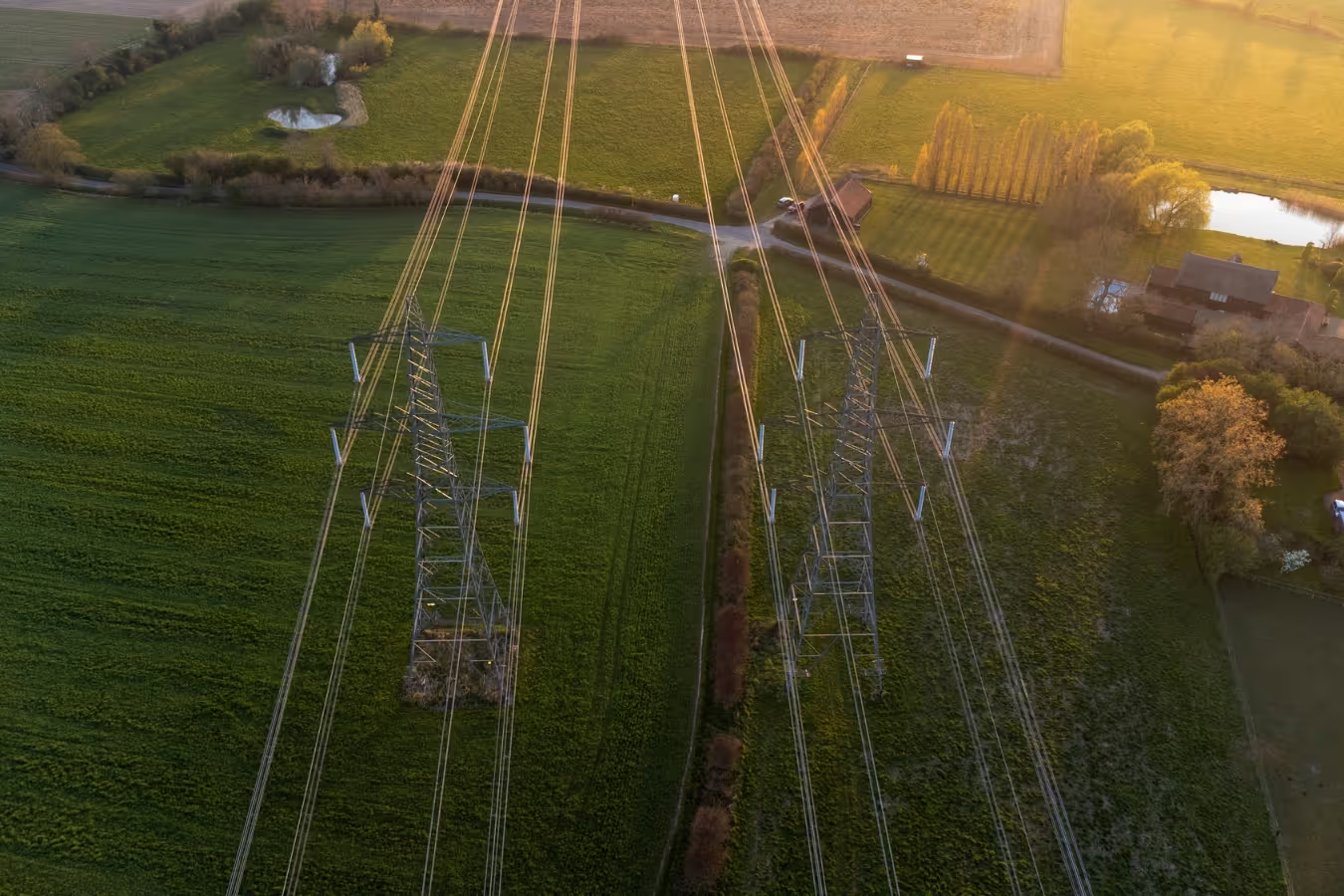
We want to accelerate the pace of upgrading the nation's homes and buildings to be warm, low carbon and affordable to heat. Improving the fabric efficiency of homes and switching to low-carbon heating are necessary building blocks for healthy and resilient communities. To level up our housing, we will need a combination of market interventions, strong policy, and national and local government to work together.
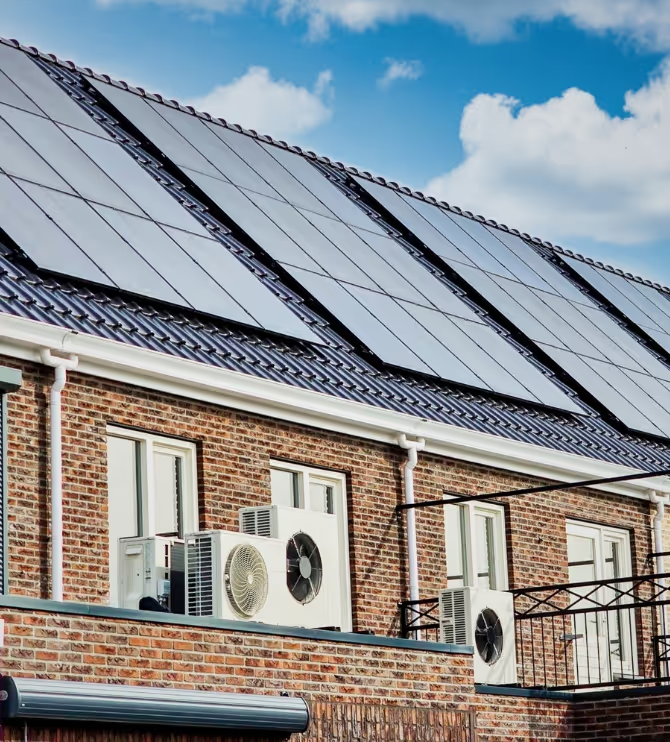
To achieve this, we are addressing several critical barriers currently slowing down the transition to low-carbon homes across the country:
13%
Percentage of households in fuel poverty in England in 2023 (ONS, 2024)
68
The median EPC score of homes in England, which equates to band D. In Wales the figure is 67 (ONS, 2024)
1%
The percentage of homes that have a heat pump installed (MCS, 2025)
6x
The factor by which the number of annual heat pump installations needs to have increased by 2028 to meet our decarbonisation targets
Volutpat non ultrices vel nisl tincidunt egestas. Consequat non bibendum condimentum quam risus fermentum.
Volutpat non ultrices vel nisl tincidunt egestas. Consequat non bibendum condimentum quam risus fermentum.
Volutpat non ultrices vel nisl tincidunt egestas. Consequat non bibendum condimentum quam risus fermentum.
Volutpat non ultrices vel nisl tincidunt egestas. Consequat non bibendum condimentum quam risus fermentum.
Joining Regen in 2025, Peter provides expertise on building and heat decarbonisation and is helping accelerate the integration of heat and building modelling into our insights across the energy landscape. Prior to this, Peter worked with Parity Projects (now part of Cotality) as an analyst and product lead for its local authority housing models. From this, he learned first hand the frustrations and challenges of delivering retrofit and heat decarbonisation in local government. He is now building those insights into Regen's analysis and policy recommendations to accelerate the efficient delivery of retrofit across the UK.




.png)
.jpg)
.jpg)

.jpg)
.jpg)